14.6 C
Nairobi
giovedì, Aprile 9, 2026

La notte infinita del Medio Oriente

Speciale per Africa ExPress Fabrizio Cassinelli 8 aprile 2026 È...

Liberata la giornalista americana Shelly Kittleson, rapita in Iraq

Africa ExPress m.a.a. (+ agenzie e New York...

Miracolo del calcio: il Congo-K dopo oltre mezzo secolo si qualifica per i mondiali

Dal Nostro Corrispondente Sportivo Costantino Muscau 7 aprile 2026 Il...
Home Blog Page 482

Convoglio di caschi blu cade in un’imboscata in Mali: uccisi 9 nigerini

0

Nostro Servizio Particolare
Cornelia I. Toelgyes
Quartu Sant’Elena, 5 ottobre 2014
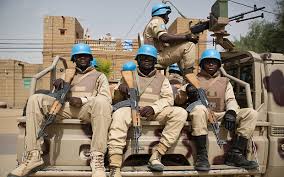
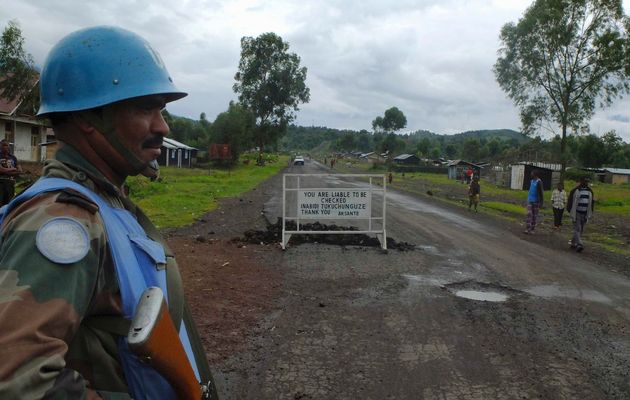
Due giorni fa è stato attaccato un convoglio logistico del corpo di pace in Mali.  Una quarantina di militari, in viaggio tra Muneka e Ansogo , nella regione del Goa, nel est del Paese,  stati attaccati da uomini armati in motocicletta, nove militari del Niger sono stati uccisi, ha riferito il portavoce dell’ONU Stephane Dujarric.

un Peacekeeper.jpg.pagespeed.ic.T_Z-TsJP2WDall’estate del 2013 sono presenti circa novemila uomini del corpo di pace United Nations Multidimensional Integrated Stabilization Mission in Mali (MINUSMA), la risoluzione del Consiglio di Sicurezza dell’ONU nr. 2164 del giugno di quest’anno ha autorizzato la loro presenza nel Mali fino al 30 giugno del prossimo anno e comprende oltre novemila uomini tra militari e forze di polizia internazionali. Il Niger partecipa a MINUSMA con seicento uomini da gennaio 2013.

Una fonte ufficiale di MINUSMA Niger ha dichiarato che il Movimento per l’unicità e il Jihad nell’ Africa occidentale (MUJAO) avrebbe stretto un’alleanza con un gruppo di fulani della regione nella quale ha avuto luogo l’attacco. Uno dei sopravvissuti conferma che sono stati attaccati da un gruppo di militanti del MUJAO.

Durante una trasmissione televisiva locale il presidente del Niger , Mahamadou Issoufou ha fortemente condannato il vile atto, ma ha confermato che le truppe del suo Paese avrebbero continuato la loro missione di pace nel Mali con MINUSMA per combattere il terrorismo.

caschi blu 1Dal canto suo il Consiglio di Sicurezza dell’ONU, tramite il segretario generale dell’ONU Ban Ki-moon ha asserito che sono state violate una serie di leggi internazionali: “Sono stato offeso dall’attacco in Mali venerdì scorso”, ha aggiunto e chiede ai gruppi armati presenti nella zona di far fede alla promessa fatta e di collaborare con le forze dell’ONU.

In un comunicato stampa MINUSMA ha dichiarato: “E’ il peggiore attacco avvenuto finora. Abbiamo impiegato le forze aeree per mettere in sicurezza la zona”.

In luglio è stato ucciso un mercenario francese nella stessa zona (http://www.africa-express.info/2014/07/16/altro-legionario-francese-ammazzato-mali-e-il-nono/). In anno e tre mesi, vale a dire da quando MINUSM è attivo in Mali, sono stati uccisi 26 militari del corpo di pace.

Cornelia I. Toelgyes
corneliacit@hotmail.it
twitter @cotoelgyes

Basic needs unmet for UK asylum-seekers

1

IRIN
London, 1 October 2014

Last month, a quiet announcement from UK Home Secretary Theresa May dashed the hopes of thousands of asylum seekers in the UK. A court ruling in April had criticized the very low level of support it gives to those seeking asylum and had given her four months to show how she had calculated that it would cover their needs. The Home Office duly did its sums, but announced that the amount to be paid would not increase.
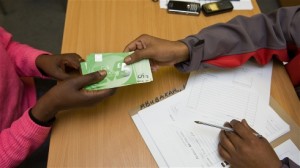
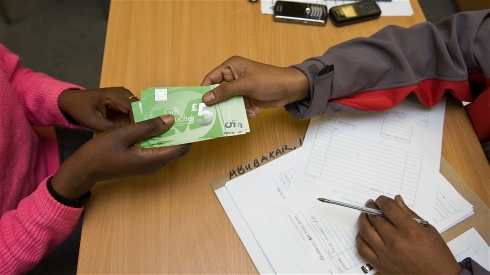
Soldi di sostegnoThe decision was a blow to campaigners who had brought the case to show that asylum seekers were being forced to live in extreme poverty while waiting for their applications to be processed.

Dave Garratt, the chief executive of Refugee Action, the organization which took the Home Secretary to court, told IRIN that asylum seekers were coming through their doors, telling them that they were really struggling to survive. But the campaigners did at least force the Home Office to give an account of how the asylum seekers’ allowance – currently just over £5 a day for a single adult – was calculated.

“Essentially what they have done,” says Garratt, “is base it on the expenditure of the lowest 10 percent of people in the UK. But we think that is quite flawed, because that is about expenditure, not about need, and many of those people have other help, from family and friends. It doesn’t take account of the special circumstances of asylum seekers who may arrive without clothes or shoes, and have no stored food to fall back on. We still think it is not high enough, but now we have the analysis written down, at least we have something we can debate about, and the formula will have to be re-applied every year so they can show they are doing their job properly.”
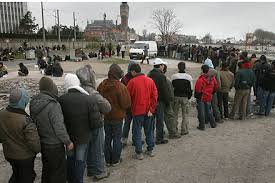
code di immigratiOne of the most blistering critiques of the system had come from the London-based organization, Freedom from Torture, which provides medical and psychological support to the victims of torture. They received 1,251 new referrals of torture survivors last year, from 80 countries; the vast majority had sought asylum in the UK. Rhian Beynon, the organization’s spokesperson, told IRIN: “The failure of the Home Office to increase the current asylum support levels is a missed opportunity and the effects will be felt by some of the most vulnerable people living in the UK today.”

TORTURE SURVIVORS SUFFER MOST

In its own report on the way poverty was affecting torture survivors seeking asylum, Freedom from Torture drew on the experiences of its clients and those who work with them to paint a bleak picture of what happens to torture victims who reach the UK and embark on the arduous process of getting refugee status.  “I am exhausted,” says one client, “living with this day by day. I am running out of stamina to deal with the pain.” “Our current living conditions keep our torture trauma still alive,” says another. “We can’t move on.”

cartelloThe system is difficult for anyone applying for asylum, but one of the organizations’ clinicians described  vividly how torture survivors suffer more than most. “You’re constantly trying to manage intrusive memories or thoughts. When you do sleep, it’s… disturbed by violent nightmares…. and lots of things can trigger flashbacks or at the very least, painful memories. Having to manage all of that – which is what our clients manage – plus the profound uncertainty of what you’re going to eat and where you’re going to go and how you’re going to get there, you know… I’m stating the obvious, but it’s much more difficult for torture survivors.”

British immigration law prohibits asylum seekers from working legally, the purported rationale being that allowing applicants to work would blur the line between asylum applicants and economic migrants, and thereby serve as a “pull factor.” Around 11 other EU states do allow asylum seekers to work – if only six months after their arrival –  and such policies do not appear to increase the number of asylum applicants.  British government policy, critics suggest,  is driven more by misperceptions of public opinion on the right to work than by empirical evidence.

RESTRICTED BENEFITS

A single adult asylum seeker’s allowance is currently only just over 50 percent of the benefit known as “income support” – in itself considered the minimum needed to lead an adequate life. In cases where an initial asylum request has been refused and a destitute applicant is waiting for the result of an appeal, or has agreed to return to their country of origin but is unable to do immediately, the allowance, known as Section 4 support, is no longer paid in cash, but loaded onto a “Azure card”. This can only be used at designated shops, for food and a limited range of other items. The recipient has no money for anything else – bus fares, postage, faxing documents or any of the other expenses needed to pursue his claim.

gay e lesbianThe British Red Cross recently called for the Azure card system to be abolished, saying in a detailed report that it did “not allow refused asylum seekers to meet their basic needs and live with dignity. It creates unnecessary suffering for people who are already in desperate situations.”

Accommodation provided to asylum seekers is also very basic – often hostel-style or shared accommodation. These shared houses can also be used for people with other social needs – people newly released from jail or struggling with drug or alcohol problems, which makes some torture survivors feel very nervous and unsafe.
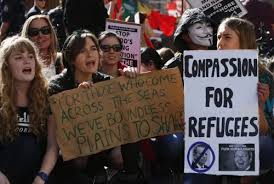
demo a favoreThe UK is also somewhat ungenerous compared with its western European neighbours. In the Netherlands, for instance, asylum seekers receive the same benefits as any other needy resident. France, Germany, Belgium and Italy have similar systems to the UK, but pay higher levels of support. And most countries are less restrictive than the UK about allowing asylum seekers to work and support themselves.

Freedom From Torture reports that poverty and anxiety are seriously compromising the ability of their clients to recover from their experiences. The low level of support means that they are not just relatively poor by British standards, but absolutely poor. More than half of the 85 torture survivors who responded to a questionnaire said they were never, or not often, able to buy enough of the right food for a nutritionally balanced diet. Thirty-four said they were never, or not often, able to buy enough food of any kind to satisfy their hunger.

The worst off were the clients with Azure cards, who could only buy at designated shops – mostly mid-priced supermarkets – rather than in the cheaper discount supermarkets or at market stalls. In one of the designated shops the cheapest form of minced meat now costs £3.75 a kilo, a tin of tuna is 95 pence and a 300gram piece of plain cheese £2. Apples are now in season and abundant, but four apples cost a pound. The daily allowance of around £5 does not go far.

Tnave affondahe doctors and therapists treating torture survivors say hunger and poor diet “negatively affects their clients’ mental and physical health, their mood, their cognition and concentration and their ability to engage fully in therapy and counselling sessions.” The problem is especially acute for those still suffering the physical effects of their ill treatment. Said one respondent: “The doctor says I have to eat a lot of protein but I cannot afford to, so I’m always weak. I faint. One time I fainted at Freedom from Torture.”
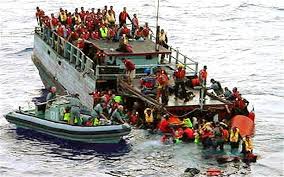
Another problem is warm clothes. It is hard on this level of income to save enough for new shoes or winter clothing. Charity shops, which sell good quality second hand garments, are useful but of little help to the Azure card holders, who can only use those run by the Salvation Army or the Red Cross – no help if the only charity shop within walking distance belongs to Oxfam. Card holders are also prevented from saving because they are not allowed to accumulate a surplus on the card – anything more than £5 disappears at the end of each week.

COLD, HUNGRY AND ISOLATED

So torture survivors are cold and hungry, and have no money for anything beyond bare necessities. Unable to visit friends, take part in social activities or even get to their church, mosque or temple, they get isolated and depressed and their recovery is set back still further. They are also often stressed by the asylum application process itself, which is extremely complicated. Missed appointments, and anything else seen as lack of cooperation can lead to a stoppage of benefits. Changes in circumstance can lead to gaps and delays in payments. Freedom from Torture recounts cases of torture survivors being left totally destitute, sleeping in the street or on night buses and searching for discarded food to eat.
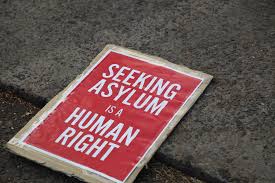
dsre asilo è diritti umaniIronically the very point at which asylum seekers finally succeed in getting refugee status can be one of the most difficult moments. Temporary support stops four weeks after that status is granted. The refugee can now work and is eligible for normal welfare benefits, but has just one month to find new accommodation and get a job, or else negotiate a whole new set of form filling, interviews and bureaucratic requirements. Doctors and therapists interviewed for the Freedom from Torture’s report said: “There’s nothing worse for our clients than thinking all your problems have ended because you get ‘status’ and then becoming homeless.” For some, they said, this is the most difficult time of all, and the point where they finally break down.

IRIN
IRIN is the humanitarian news and analysis
service
 of the UN
Office for the Coordination of Humanitarian affairs


The opinions expressed
 do not necessarily

 reflect
 those of the United Nations
 or its Member States

Zimbabwe’s Tonga fishermen cut off from Zambezi lifeline

IRIN
Binga, 29 September

The Tonga ethnic group, who make up the majority of the estimated 200,000 people living in rural Binga District in Zimbabwe’s Matabeleland North Province, has for generations depended on fishing for food and an income. But unaffordable government levies are making their lives increasingly difficult.

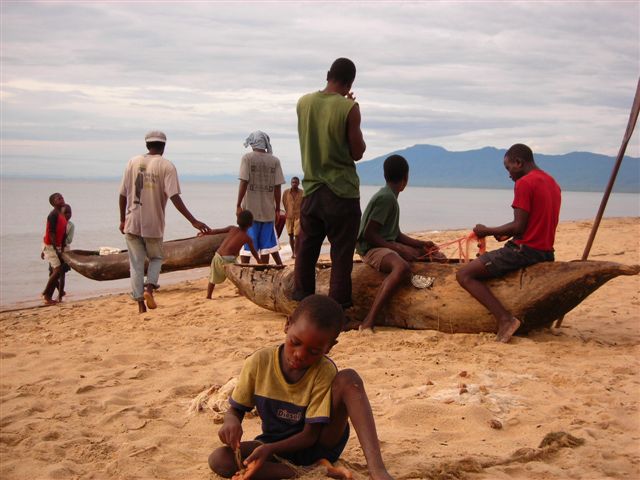
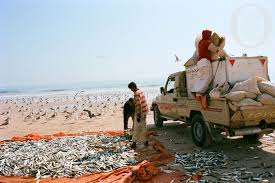
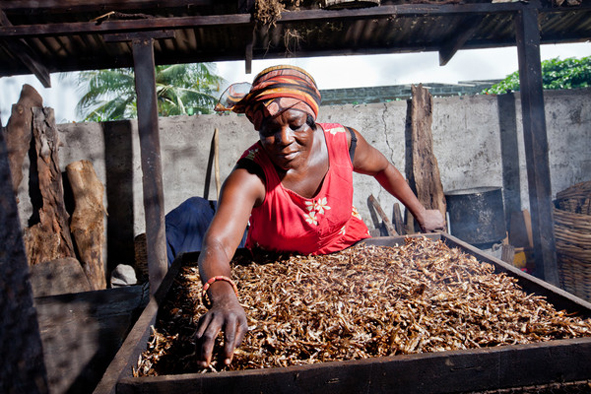
pescatoBinga District is too dry to make crop farming viable. The area is also under-developed despite being rich in mineral and timber resources. As a result, local communities look to the Zambezi river for fish – mostly bream and kapenta – for household consumption and sale to small-scale and commercial buyers from urban centres as far afield as Harare, some 500km away. Income raised from the fish is used to buy other food items, in addition to paying for school fees and medical expenses.

The Tonga used to enjoy unlimited access to the Zambezi but this started changing about two decades ago when government departments – including the Parks and Wildlife Management Authority, local district councils and the Zimbabwe Revenue Authority (ZIMRA) – began charging levies to fish the river. The fees at first were small and the authorities were not strict, but they have been increasing over the years, according to Kudakwashe Munsaka, director of Siabuwa Development Trust, one of the few community-based organizations fighting to promote the welfare of the Tonga.

“For a long time, we have been lobbying government to develop our area which is rich in natural resources. It is officially confirmed that there are good coal, gold, tantalite, uranium and diamond deposits and vast land under indigenous timber in this area but nothing is happening and we wonder why,” said Munsaka.

“This leaves the Zambezi river as our only salvation. and there should be unhindered access to it, but the problem is that the Tonga people are now virtually barred from fishing from it because of prohibitive levies and this is driving poverty levels up. Instead, the river is now benefiting fishers and traders from the cities and towns who have the money to pay the levies.”

Currently, anyone wishing to fish using nets or rods must pay US$5 a day, while commercial fishers operating boats pay $2,500 to the parks and wildlife authority every three months, $350 to ZIMRA and $40 per rig per year to the rurpescato 2al council.

Fishing on the Zambezi river is dominated by commercial fishers from urban areas who are charged the same levies as the locals but often sell their catch in towns and cities at higher prices.

Unaffordable levies

“Where can the villagers get the $5 a day to pay to fish when almost all of them are living on less than a dollar a day and are therefore extremely poor? What it means is that they have to resort to sneaking in to poach for fish or stay at home and starve,” said Munsaka.

Lainah Dube of the Zimbabwe Coalition on Debt and Development (ZIMCODD), an NGO that promotes sustainable economic and social policies for local communities and is helping villagers in Binga to improve their livelihoods, said there was a need for the authorities to revisit the amount of levies being charged. “We cannot afford them considering that our markets have been dwindling. It would help if us locals pay less than the outsiders,” she told IRIN.

She added that the authorities had also limited the times during which fishers could cast their nets from between late afternoon to early morning. “This has compromised our production levels and we are feeling the brunt because we hardly have anything to take home,” she said.

Those that are caught poaching often have to pay fines they cannot afford. The parks authority fines poachers $20 while those with unlicensed boats are charged $50.

Corruption at play?

Poaching has also given rise to corruption, according to Tracy Munenge, 34, a local mother of two who belongs to the Zubo Balizwi Trust, a struggling women’s fishing cooperative. “The parks and council officials leave you to fish and, at the end of the day, take whatever you caught, saying you were poaching. They even follow the villagers to the local shops where they will be selling their fish and take them away,” Munenge told IRIN.

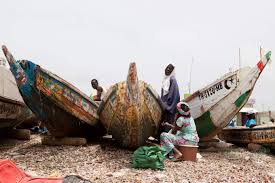
barcheCaroline Washaya-Moyo, a spokesperson with Zimbabwe’s Parks and Wildlife Management Authority, insisted that wardens from her department were not corrupt and told IRIN: “We have always heard these complaints about the Tonga people being alienated from the Zambezi river, but we are operating within our mandate.”

She added that the levies would stay as they were a means of discouraging uncontrolled fishing that might lead to the depletion of fish or the extinction of some types of water life.

However, John Robertson, an economist, said the local authorities, ZIMRA and the parks authority were using the levies to boost their small budgets. “All these departments are operating on shoe-string budgets and they are just too happy to descend on the fishers to raise income for their own use,” he told IRIN.

Fishing cooperatives struggle to survive

The Zubo fishing cooperative started in 2011 with funding from UN Women but, according to Munenge, since some of the original members left and levies have increased every year, it is no longer viable. “At the beginning, things worked out well. There were 10 of us and two men who worked as captains. We used to share profits at the end of every month and managed to pay the levies. Only five are left now but, even then, we are not operating the rig because we are in arrears,” she said.

She added that scores of other villagers had joined fishing cooperatives in an attempt to pool resources for the payment of levies, but that all of them were struggling or had folded and that many were now resorting to poaching while others had turned to craft making for a living – weaving baskets or making furniture from the timber that is abundant in the district. But such ventures are still small-scale due to the lack of access to finance.

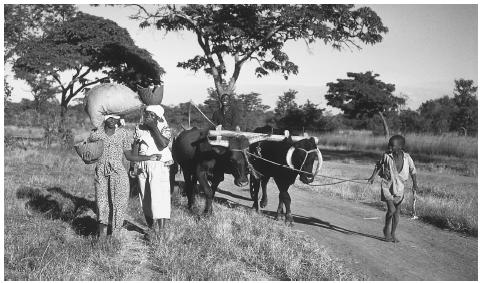
contadiniSalani Nyirenda, 69, a village head from Binga South, who remembers a time when the Tonga people had unfettered access to the river, said: “Government must allow us complete freedom to fish from the river. We must also be let to set up vegetable gardens along the river and there is need for irrigation schemes along the Zambezi. We would use the vegetables to feed our families and sell to the towns and cities. There is so much poverty here.

” He said national parks authorities had banned them from setting up gardens along the river”.

Francis Mukora of the Zimbabwe Community Development Trust (ZCDT), an NGO that campaigns for members of disadvantaged communities, said while the authorities were acting within the law by imposing levies, preventing the Tonga from fishing the Zambezi contradicted government policy to empower its citizens.

“This limits these communities’ access to their major source of income and fuels poverty and food insecurity while depriving them of highly nutritional but affordable food. While other people have been given farms [through the land reform programme], people from Binga must be empowered through adequate access to the Zambezi,” he told IRIN.

IRIN
IRIN is the humanitarian news and analysis
service
 of the UN
Office for the Coordination of Humanitarian affairs

The opinions expressed
 do not necessarily

reflect those of the United Nations
 or its Member States
Un anno fa la tragedia di Lampedusa: le promesse non mantenute

Nostro Servizio Particolare
Cornelia I. Toelgyes
Quartu Sant’Elena, 3 ottobre 2014

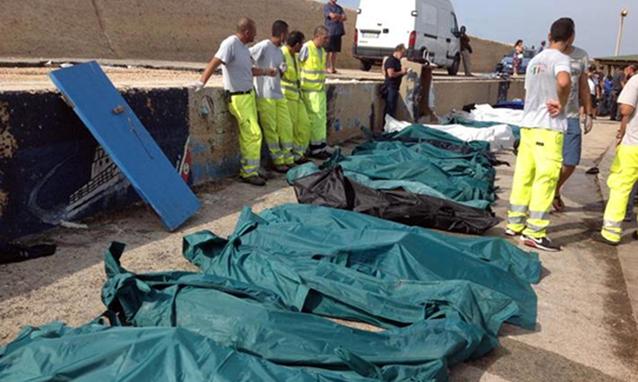
3 ottobre 2013: 368 morti. L’Italia, il mondo intero ne era sconvolto. Indignato. Tutti erano concordi: non deve succedere mai più una tragedia del genere. Eppure, continua a succedere. Pochi ne parlano. I più non si accorgono. Abbiamo già versato una lacrimuccia il 3 ottobre. Mi sento tranquillo con la mia coscienza.

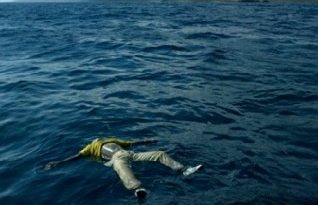
Cadavere galleggianteEppure è successo ancora e ancora. Nel 2014 sono morte altre 3072 persone in mare, senza contare quelle del naufragio di ieri, vicino alle coste libiche. E succederà ancora.  Non basta fermare gli sbarchi in Libia. Gli sbarchi non finiranno, finché ci saranno persecuzioni e guerre inutili (anzi, utili solo a qualcuno) nella patria di chi cerca solo un po’ di pace, un briciolo di libertà.

Le associazioni per i diritti umani chiedono da tempo corridoi umani sicuri per i rifugiati, migranti. Ma nessuno ascolta.  Nessun governo è pronto ad affrontare questo problema, nessun governo è disposto ad interventi mirati nei Paesi d’origine dei profughi. Ognuno ha diritto di vivere in pace nel proprio Paese. Chi deve lasciare la sua casa, è un orfano d’amore.

“Finalmente siamo sul barcone. Inizia una nuova vita!”. Certamente è queston il pensiero dei più al momento della partenza da un qualsiasi porto della Libia ormai in fiamme, o da un altro porto, forse in Egitto, partenza di molti siriani e palestinesi.

 fila di mortiOgnuno di loro si lascia alle spalle sofferenze indescrivibili: guerra, persecuzioni, fame nera. Chi lascia la sua terra, le proprie radici, gli affetti più cari, la propria lingua, non lo fa tanto per il gusto dell’avventura. Tutti sono ben consapevoli a ciò cui vanno incontro: mettono in conto anche di poter morire durante la fuga.

Africa ExPress ha parlato in molti articoli dei profughi, delle loro tortuose vie di fuga. Le morti nel deserto del Sahara di persone abbandonate senza pietà da trafficanti di uomini. Gli arresti per immigrazione clandestina in Egitto e nel Sudan che spesso si concludono con il rimpatrio forzato. E per non dimenticare, i terribili beduini del Sinai, che per anni hanno catturato vittime innocenti con la complicità di forze dell’ordine corrotte, riducendole in totale stato di schiavitù: la tortura era il loro pane quotidiano, richieste di riscatto ingenti ai familiari e, se i soldi non c’erano, spesso la morte e/o l’espianto degli organi, rivenduti poi al mercato nero.

[embedplusvideo height=”430″ width=”570″ editlink=”http://bit.ly/ZyWAZv” standard=”http://www.youtube.com/v/1cSshWnRc64?fs=1&vq=hd720″ vars=”ytid=1cSshWnRc64&width=570&height=430&start=&stop=&rs=w&hd=1&autoplay=0&react=1&chapters=&notes=” id=”ep5803″ /]

Una volta giunti in Libia, spesso un altro arresto. Ma chi lotta per la propria vita, per il proprio futuro tiene ben stretto quel sacchetto di plastica, spesso l’unico bagaglio portato con sé al momento di partenza. In quel misero bagaglio c’è la vita: i ricordi e i sogni, l’unica compagnia in questo mondo così ostile, crudele.

In questo ultimo anno vi abbiamo raccontato la storia di Robiel (http://www.africa-express.info/2013/11/09/storia-di-robiel-morto-annegato-scappato-dalleritrea) , annegato a Calais, di Maru, che cerca in ogni dove la figlioletta scomparsa in mare (lui è sicuro che è viva).  http://www.africa-express.info/2014/01/03/cerco-la-mia-figlioletta-scomparsa-mare-al-largo-di-malta-mentre-scappava-dal-sudan-con-sua-madre-affogata/ e http://www.africa-express.info/2014/07/20/sul-barcone-della-morte-dalla-libia-lampedusa-maru-un-papa-che-non-si-arrende/.

All’inizio di quest’articolo c’è scritto che nel 2014 sono annegati oltre 3000 migranti. I più senza nome. E chi muore senza nome, muore due volte.

Cornelia I.Toelgyes
corneliacit@hotmail.it
twitter: @cotoelgyes

Il video della canzone che presentiamo, “Are You Listening”,  racconta le pene e le sofferenze degli eritrei in fuga dalla disumana dittatura che governa il loro Paese. Parla di coloro che sono annegati, di coloro che sono morti, vittime della violenza dei trafficanti di esseri umani, o che sono stati uccisi per espiantare gli organi e delle loro speranze di raggiungere una vita migliore in Occidente.


Dossier Nigeria 3-Complicità istituzionali ad alto livello, ecco la forza dei Boko Haram

0

Speciale per Africa ExPress
Blessing Akele
Lagos, 1° ottobre 2014 (Independence day in Nigeria)

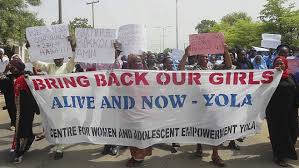
Se gli attacchi di Boko Haram già facevano notizia in giro per il mondo, il maxi sequestro delle ragazze è esploso come una bomba. L’operazione ha sortito l’effetto desiderato. Persino la consorte del Presidente degli Stati Uniti, Michel Obama, si è fatta ritrarre con la scritta #Bringbackourgirls (riportateci le nostre ragazze, in italiano). Non si era mai sentito che i terroristi (anche quelli altri attivi in giro per il Medio Oriente), abbiano sequestrato così tante persone in una volta. Questa è Nigeria e le cose nigeriane hanno sempre un tocco proprio.

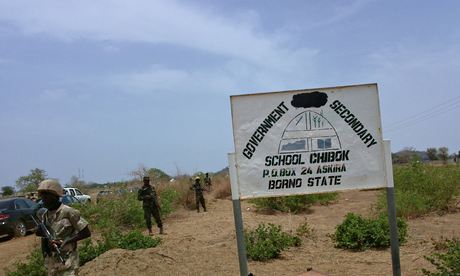
Soldiers stand guard in front of the school in Chibok, NigeriaSulla vicenda restano aperte tante domande. Come hanno potuto i terroristi di Boko Haram trasportare tutte quelle ragazze da Chibok nello Stato di Borno fino alla destinazione di Sambisa senza che fossero state intercettate dalla polizia, dai militari e dai servizi d’intelligence ormai allertati? E lascia perplessi la facilità con la quale il gruppo ha iniziato e portato a termine l’operazione di sequestro.

Nello stesso Stato di Borno, nel mese di dicembre 2013, Boko Haram ha sferrato un altro micidiale attacco a una scuola media superiore causando morti e feriti anche allora. Adesso con la questione delle ragazze ancora sotto sequestro, il Ministero dell’Istruzione Federale, rappresentato da Nyesom Wike, e il governatore dello Stato di Bornu, Kasshim Shettima, sono impegnati in una polemica accesa da scaricabarile ed ad accusarsi a vicenda d’inerzia e responsabilità dell’accaduto.

Il Ministero dell’Istruzione, per chiarire la sua posizione ha pubblicato una circolare, protocollata con il numero HMSE/FME/147/VOL.1/150, in cui, prima del maxi sequestro, aveva invitato i governatori di quei tre Stati a rischio insicurezza a indicare luoghi adeguati e protetti per lo svolgimento degli esami di WASC.  Tra le località inizialmente previste per sostenere gli esami a Borno, c’era proprio Chibok. Secondo quella circolare quella sede non era sicura e bisognava cambiarla. Messo sotto accusa il governatore Shettima all’inizio balbetta, poi denuncia e rilancia: il governo federale non ha fornito al nostro Stato sufficienti mezzi d’assistenza che gli avrebbero consentito di attuare la rilocazione delle sedi d’esame, dice più o meno.

Demo 3Eppure, in questo stesso Stato di Borno e negli altri due, Adamawa e Yobe, fonti autorevoli riferiscono che i membri del gruppo terrorista vengono riforniti nelle loro roccaforti di viveri, di medicinali e di armi con elicotteri. E le autorità locali appaiono ignare di tutto ciò.

Ancora nel 2013, i membri di Boko Haram hanno attaccato la sede dell’aviazione a Maiduguri (capitale dello Stato di Bornu) demolendo e appiccando il fuoco a installazioni militari. E le autorità locali ancora una volta sono cadute dalle nuvole.

Essendo la Nigeria ormai una democrazia, le domande si pongono e le risposte si pretendono da chi gestisce il potere. Le domande sono ad esempio queste: se si conoscono fisicamente alcuni dei capi di Boko Haram e i nomi di altri, come mai la polizia, l’esercito non intervengono? Parlo per esempio di persone come Al-Amin Dagash, ex maresciallo dell’aeronautica, o di quello che viene considerato il leader supremo, Abubakar Shekau, apparso in televisione in un video fatto recapitare ai media.

[embedplusvideo height=”430″ width=”570″ editlink=”http://bit.ly/10m3fpT” standard=”http://www.youtube.com/v/Rl4IgD–nKg?fs=1&vq=hd720″ vars=”ytid=Rl4IgD–nKg&width=570&height=430&start=&stop=&rs=w&hd=1&autoplay=0&react=1&chapters=&notes=” id=”ep8613″ /]

E se si conoscono i loro rifugi e roccaforti, come sembra che sia, quale e la ragione che induce le autorità preposte a rimanere inerti? Da oltre tre anni il governo non è stato in grado di costituire una task force con le migliori intelligenze civili e militari di cui il Paese dispone.  Come si spiega? E vero che alcuni membri minori sono stati arrestati, ma appunto sono personaggi di poco importanza.

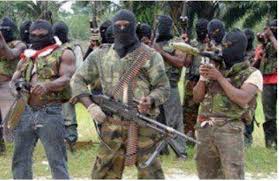
Militanti BokoIn seguito a queste domande e un certo sfottò dei nigeriani verso i militari, questi ultimi si sono senti attaccati e offesi nell’orgoglio e infatti, il 4 Aprile 2014, il rapimento di massa delle 300 ragazze a Chibok non era ancora accaduto, il maggiore generale Chris Olukolade, portavoce del ministero della Difesa, ha lanciato un avviso alla stampa:  in sostanza minacciava pesanti punizioni contro chi avesse “osato” criticare gli sforzi dell’esercito. Il monito è francamente incomprensibile in una democrazia.

Blessing Akele
(3 – continua)


Nel video di SaharaReporters che proponiamo, datato 24 agosto 2014, Boko Haram dichiara che la città di Gwoza è il nuovo quartier generale del califfato islamico fondato nel nordest della Nigeria. Dopo una lunga prolusione (25 minuti circa) del leder dei terroristi, Abubakar Shekau, le immagini mostrano la cattura di una santabarbara dell’esercito e soldati che scappano per mettersi in salvo. SaharaReporters non fa vedere gli ultimi 10 minuti del video: troppo crudi e trucidi. Mostrano le atrocità dei militanti di Boko Haram che ammazzano a sangue freddo civili innocenti.

La prima  puntata del Dossier Nigeria
Boko Haram: una minaccia  problema che viene da lontano
http://www.africa-express.info/2014/09/15/dossier-nigeria-1boko-haram-un-problema-che-viene-da-lontano/

La seconda puntata del Dossier Nigeria
I musulmani quasi sempre al potere: il ruolo dei militari
http://www.africa-express.info/2014/09/17/dossier-nigeria-2i-musulmani-quasi-sempre-al-potere-il-ruolo-dei-militari/ 

Ebola and the media – Nigeria’s good news story

IRIN
Lagos, 2nd October 2014

When an Internet message announcing a salt water solution for Ebola went viral in July, many Nigerians were quick to take heed. Twenty people were hospitalized and two died, reportedly from an excessive intake of salt.

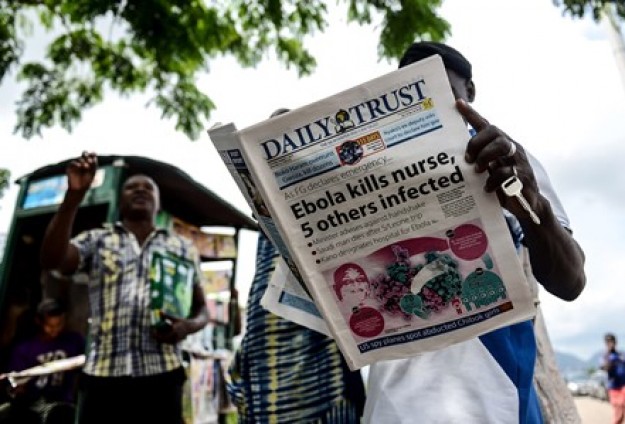
lettura giornaleMadam Franca was among those ready to believe in the power of salt water. “My niece, who happens to be a nurse, sent me an SMS that early morning, and I obeyed it,” Franca explained. “I had to do anything to stop Ebola from coming close to me. I bathed with salt water, morning and night for two good days, but I did not drink. I am hypertensive. I also sent all my family and close friends the SMS.”

Nigerians watched with growing unease as the Ebola outbreak spread through Guinea, Sierra Leone and Liberia. Few believed the creaking health infrastructure or the government’s managerial skills would be able to survive such a test. So when Ebola-positive Liberian Patrick Sawyer stepped off a plane in Lagos airport on 20 July, collapsed and died, social media exploded.

But it was not just the salt water claims and bogus pastors promising salvation that made the running: government agencies and proactive individuals also took to the Internet to quickly debunk the rumours and offer proper advice. The authorities also threatened to arrest anyone spreading falsehoods, starting with the salt water “cure”. There was, after all, a plan in place. [ https://www.youtube.com/watch?v=tiJ6YPptdGA ]

A MASS AUDIENCE FOR MESSAGES  

At 67 million users, Nigeria reportedly has the eighth largest Internet population in the world. It also had close to 166 million mobile subscribers as of June. (The country’s population is 175 million.) [ http://www.internetworldstats.com/africa.htm ] [ http://www.ncc.gov.ng/index.php?option=com_content&view=article&id=125&Itemid=67 ]

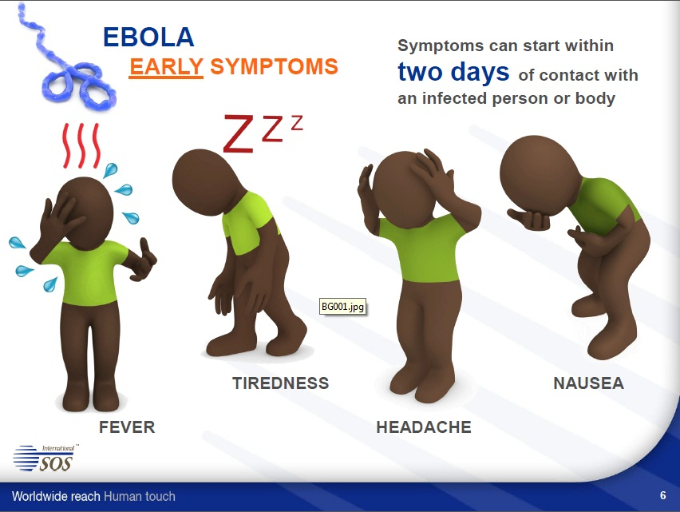
propagandaWith so many Nigerians online, portals like ebolalert.org set up by volunteer doctors, and the public/private ebolafacts.com initiative, have become important channels to provide accurate information to help people stay safe. [ http://www.ebolaalert.org/ ] [ http://ebolafacts.com/en/1-what-is-ebola.html ] They complement telephone hotlines and more traditional public health approaches.

The UN Children’s Fund (UNICEF) has also taken a role in the communications work on Ebola, using the SMS portal UReport. UReport Nigeria is a free SMS platform designed as a community-based two-way information exchange mechanism. According to UNICEF Communications Specialist Geoffrey Njoku, over 57,000 people received more than 3.6 million SMS containing key messages about Ebola and how to stay protected over a six-week period.

COMFORT AND CONFIDENCE 

For some who have used the service, like Dr Adoara Igonoh, an Ebola survivor, the advice given offered reassurance and quelled fears. “I began to think about my mother,” Igonoh recalled. “She was under surveillance along with my other family members. I was worried. She had touched my sweat. I couldn’t get the thought out of my mind. Hours later on Twitter I came across a tweet from the WHO [World Health Organization] saying that the sweat of an Ebola patient cannot transmit it at the late stage [after the incubation period]. That settled it for me. It calmed the storms that were raging within me concerning my parents.”

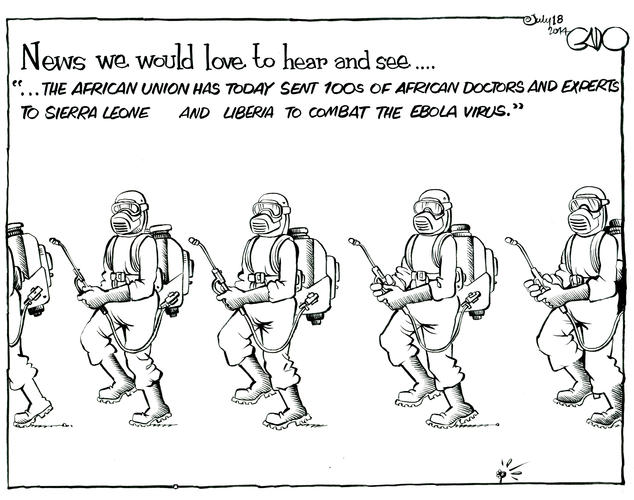
 cartoonNigeria has won praise from the international community for its response to the outbreak. While Ebola continues to burn in Liberia, Sierra Leone and Guinea, in Nigeria it appears to have been contained with only 21 confirmed cases and eight deaths – with the last case reported on 8 September and tracing having proven effective. [ http://www.afro.who.int/en/clusters-a-programmes/dpc/epidemic-a-pandemic-alert-and-response/outbreak-news/4279-evd-outbreak-20-september-2014.html ]

“A key issue in the fight against Ebola after the provision of the necessary human and technical infrastructure is information management,” said Tochuwu Akunyii, an online writer on public policy and international development. “In information management, the dissemination of accurate information is crucial; social media can be vital in this process.” Akunyii pays particular tribute to Nigerian youth and its use of forums and platforms like Twitter and Facebook.

SOCIAL MEDIA COMPLEMENTED TRADITIONAL MEDIA 

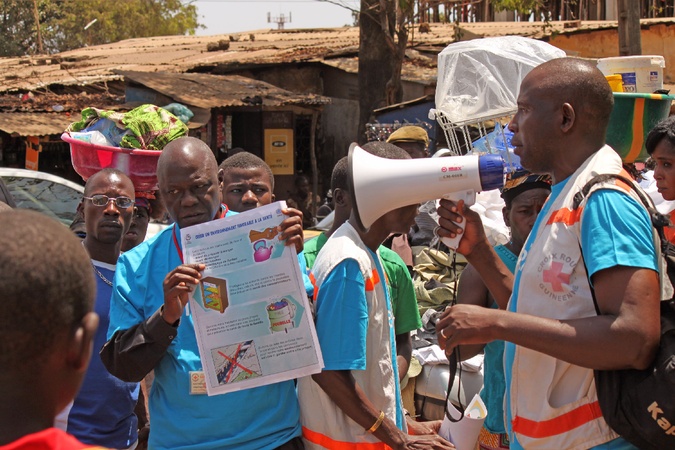
Nigerians who do not have access to the Internet and mobile phones have not been left out of the Ebola campaign. Traditional mediums like radio, flyers, posters, village meetings and announcements by town criers are all being used. Priority is given to local languages.

Comparing the traditional methods of campaigning to social media and SMS campaigns, Nwokedi Moses, better known as Big MO, a vernacular language broadcaster with Wazobia FM, said the two approaches worked well together. “The social media Ebola campaign was massive, but it complemented the traditional media. This is due to social media’s limited reach within rural areas.”

cartoon 2Local authorities have also taken the initiative. The Lagos State and Rivers State governments – the only two states where Ebola emerged – incorporated traditional awareness-raising campaigns like road shows, radio and TV jingles, distributing flyers, and educating the public on basic hygiene. Since Ebola first emerged, there has been a roaring trade in hand sanitizers and a corresponding collapse in the “bush meat” market.

As Nigeria gradually returns to normal, signalled by the slightly hesitant reopening of schools on 22 September, health campaigners are moving to tackle the new challenge of ending the stigmatization of those who have recovered from Ebola – backed by a government warning threatening action against those that discriminate.

Lagos State Governor Babatunde Fashola recently met survivors to confirm that an Ebola-free certificate means what it says. Health Minister Onyebuchi Chukwu has declared survivors the “safest people to be around”, given their new immunity to the virus.

IRIN
 IRIN is the humanitarian news and analysis
service
of the UN
Office for the Coordination of Humanitarian affairs
The opinions expressed
 do not necessarily
reflect those of the United Nations
 or its Member States
Ebola all’attacco anche in America: primo infetto a Dallas

Nostro Servizio Particolare
Cornelia I. Toelgyes
Quartu Sant’Elena, 1° Ottobre 2014

Ieri è stato diagnosticato
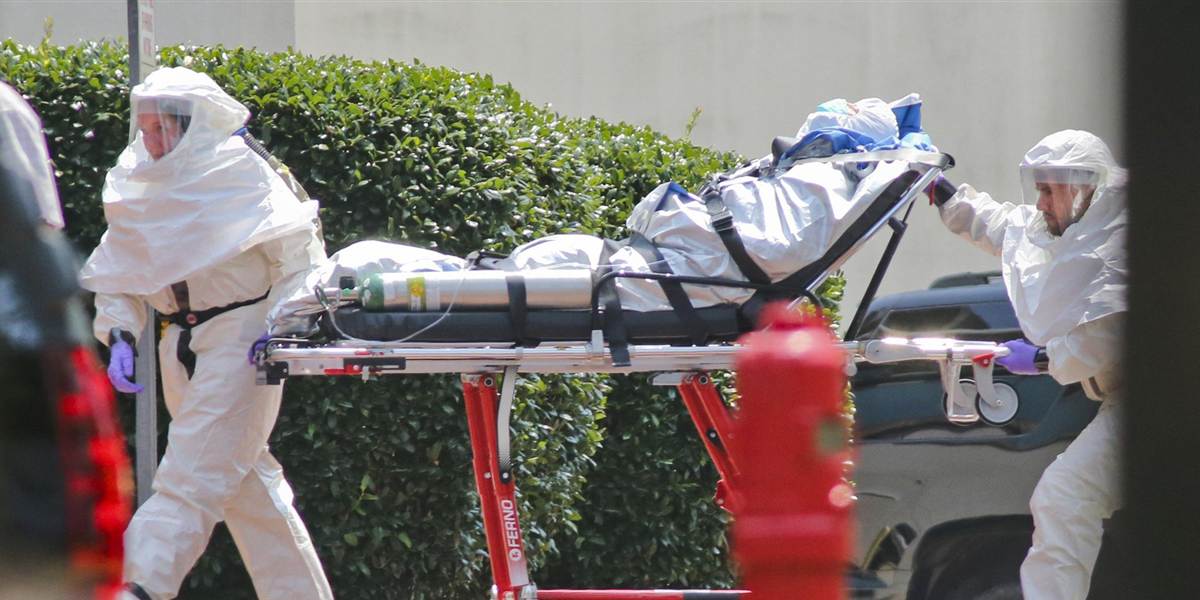
il primo caso di ebola negli Stati Uniti.  Il paziente, di cui per motivi di privacy non si conosce l’identità, è ricoverato al Health Presbyterian Hospital a Dallas, nel Texas. Edward Goodman, medico dell’istituto, ha confermato : “E’ ammalato di ebola e si i trova nel reparto di isolamento”.

ebola barella  barellieriThomas Frieden,  direttore di Center of Deases Control and Prevention (CDC) durante una conferenza stampa tenutasi nella tarda serata di ieri ha comunicato che il paziente è arrivato dalla Liberia il 19 settembre. I primi sintomi sono apparsi il 24. Il 26 si è rivolto ai medici e il 28 è stato ricoverato. Ho ragione di credere – ha aggiunto – che non sarà né il primo né l’ultimo caso nel nostro Paese”. Poi ha sottolineato: “Il paziente è entrato in contatto con poche persone dopo l’apparizione dei sintomi; un team del CDC sta raggiungendo Dallas per poterle individuare ed identificare quanto prima.

Da luglio di quest’anno altre dodici persone sono state sottoposte al test contro l’ebola negli USA; tutte sono risultate negative.

[embedplusvideo height=”470″ width=”590″ editlink=”http://bit.ly/YRD4pX” standard=”http://www.youtube.com/v/s8QMKYwVKtI?fs=1&vq=hd720″ vars=”ytid=s8QMKYwVKtI&width=590&height=470&start=&stop=&rs=w&hd=1&autoplay=0&react=1&chapters=&notes=” id=”ep2054″ /]

A tutt’oggi quattro operatori sanitari americani sono ricoverati in reparti speciali di isolamento in ospedali di Atlanta e del Nebraska. Si tratta di volontari che hanno prestato la loro opera in uno dei tre Paesi maggiormente colpiti dall’ebola. Un quinto cittadino statunitense, un medico, si trova attualmente sotto osservazione in un reparto simile all’Istituto nazionale per la salute pubblica.

Mentre gli occhi del mondo sono puntati sul paziente ricoverato a Dallas, in Africa si continua a morire. Nuovi casi di ebola sono stati registrati nei tre Paesi maggiormente colpiti: Guinea, Sierra Leone e Liberia. Secondo l’ultimo bollettino, rilasciato dall’Organizzazione mondiale della sanità (OMS) il 26 settembre 2014,  la situazione è la seguente:

Le persone affette dal temibile virus sono ben 6553, i deceduti sono 3083, così suddivisi: Guinea, 648; Sierra Leone, 605; Liberia, 1830.

In Senegal e in Nigeria, invece, sembra che il virus sia sotto controllo. Dall’inizio di settembre nei due Paesi non si sono registrati nuovi casi. Nell’ex colonia francese l’unico ammalato è sopravvissuto.

Secondo gli ultimi studi effettuati, entro i primi di novembre, se non si riesce a circoscrivere e tenere sotto controllo la peggiore epidemia del secolo, potrebbero ammalarsi di ebola almeno 20 mila persone. La situazione è gravissima specialmente in Liberia mancano i posti letto in strutture specializzate anche per la mancanza di personale sanitario. Finora 375 operatori sanitari nei tre Paesi maggiormente colpiti si sono ammalati, 211 sono morti.

[embedplusvideo height=”470″ width=”590″ editlink=”http://bit.ly/YRDtIW” standard=”http://www.youtube.com/v/xcvnsxjylhU?fs=1&vq=hd720″ vars=”ytid=xcvnsxjylhU&width=590&height=470&start=&stop=&rs=w&hd=1&autoplay=0&react=1&chapters=&notes=” id=”ep7687″ /]

Per arginare il contagio e tenere sotto controllo il terribile, invisibile killer, l’ONU ha istituito una settimana fa una speciale missione, United Nations Mission for Ebola Emergency Response (UNMEER), con sede ad Accra, in Ghana. fortemente voluta dal suo segretario generale Ban Ki-moon. E’ la prima volta nella storia che le Nazioni Unite intervengono con una missione d’emergenza per la salute pubblica.

Il capo di UNMEER, rappresentante speciale del segretario generale, Anthony Banbury,  è giunto ad Accra martedì per assicurare effettive e coerenti azioni necessarie per fermare la diffusione, curare coloro che sono stati contagiati, assicurare i servizi essenziali, preservare la stabilità nei tre Paesi maggiormente colpiti.

Un portavoce dell’Onu, Stéphane Dujarric ha sottolineato: “Nei prossimi giorni Banbury si recherà in Sierra Leone, Guinea e Liberia per aprire ufficialmente le sedi locali di UNMEER.

Cornelia I. Toelgyes
corneliacit@hotmail.it
twitter @cotoelgyes

Saccheggi, stupri, omicidi questa la guerra in Sud Sudan: in palio il petrolio

0

Dal Nostro Inviato Speciale
Massimo A. Alberizzi
Malakal, 22 settembre 2014

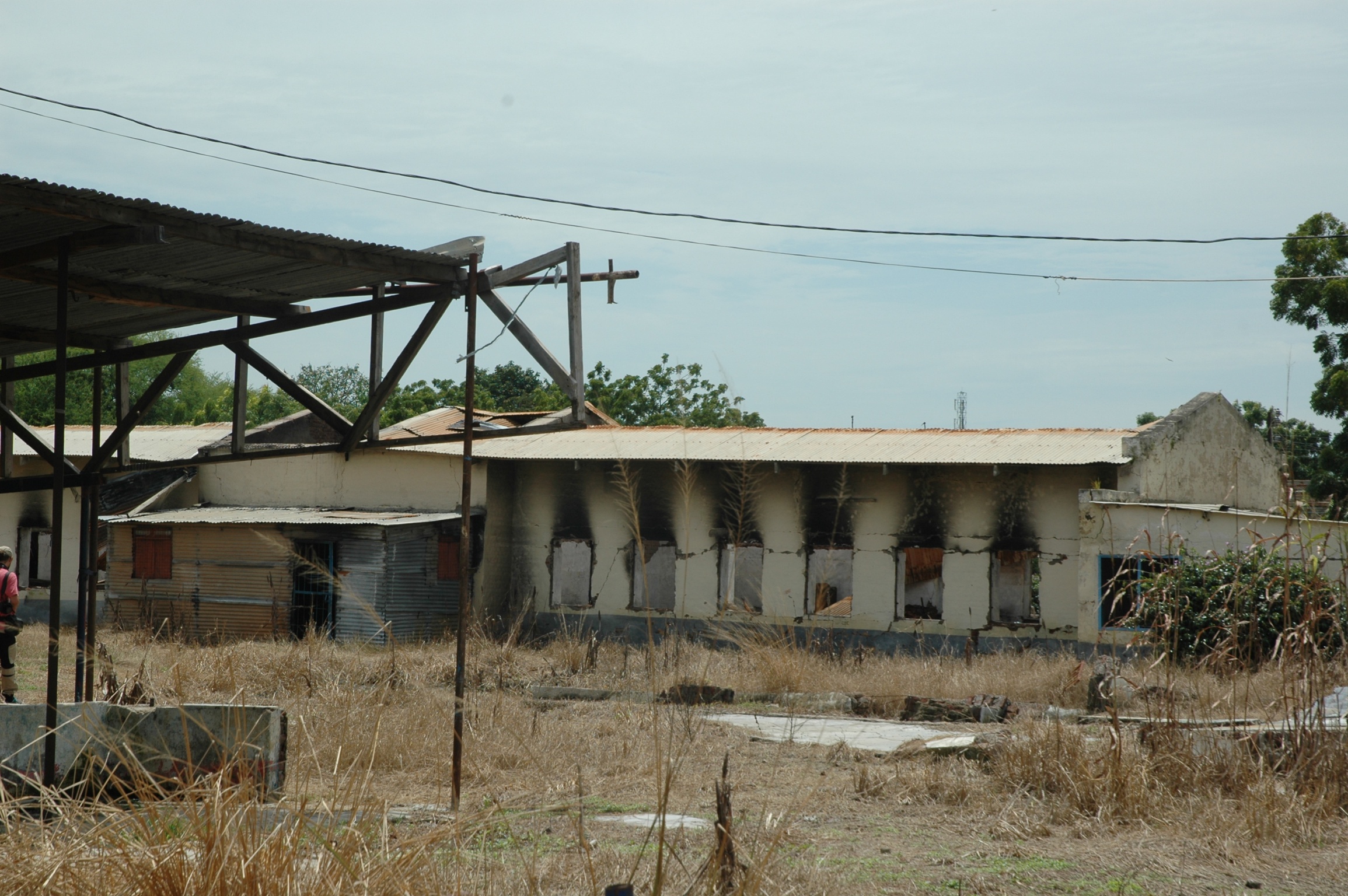
saccheggio ospedaleOgni tanto davanti alla ferocia umana si rimane confusi e sbalorditi e ci si domanda come si possa arrivare a tanto. E’ la sensazione che si prova entrando nell’ospedale saccheggiato di Malakal, la capitale dell’Upper Nile in Sud Sudan. Malakal è passata di mano diverse volte ribelli, governativi, ribelli e ancora governativi. Ogni volta se la sono data di santa ragione. E’ ogni volta è passata l’ondata di razzie che ha devastato edifici pubblici e case private. Saccheggi, omicidi, stupri: ogni guerra, maledizione, porta sempre le stesse cose.

Per atterrare a Malakal il nostro aereo scende a spirale per evitare di essere bersaglio di qualche missile sparato, magari a casaccio, dai gruppi ribelli o filogovernativi che operano nei dintorni della città.

[embedplusvideo height=”470″ width=”590″ editlink=”http://bit.ly/YESptE” standard=”http://www.youtube.com/v/CcOJ8OTwXxM?fs=1″ vars=”ytid=CcOJ8OTwXxM&width=590&height=470&start=&stop=&rs=w&hd=0&autoplay=0&react=1&chapters=&notes=” id=”ep6890″ /]

Oggi la capitale dello Stato dell’Upper Nile  è un città fantasma. Di giorno tra le macerie e i ruderi c’è qualcuno che vende il the e qualche misera mercanzia. Di notte non c’è proprio nessuno e tutti cercano rifugio nella base, ben guardata dalle truppe dell’UNMISS (United Nations Mission in South Sudan), che ospita più di 20 mila persone.

All’ingresso della città c’è l’ospedale devastato, saccheggiato e vandalizzato: “Una parte del complesso, quella che ospitava i bambini e la maternità, era stata costruita appena due anni fa – spiega il dottor Steven Akwott che ha studiato a Khartoum e si è specializzato a Cairo e Port Sudan -. L’edificio del laboratorio di analisi era appena terminato e doveva essere consegnato da lì a pochi giorni”. Il saccheggio non è stato meticoloso. Certo i materassi, ghiotta preda da queste parti, sono spariti. Ma che quello che impressiona di più è il vandalismo con cui sono state distrutte le suppellettili e soprattutto le apparecchiature.

[embedplusvideo height="470" width="590" editlink="http://bit.ly/YET8ez" standard="http://www.youtube.com/v/SP5b964j2Q0?fs=1&vq=hd720" vars="ytid=SP5b964j2Q0&width=590&height=470&start=&stop=&rs=w&hd=1&autoplay=0&react=1&chapters=&notes=" id="ep6471" /]
I saccheggiatori in azione cercano di lasciare le cose in buone condizioni perché poi se le portano a casa. Qui no: la furia vandalica ha superato la smania di rubare.

“Il nostro ospedale curava non solo i bambini e le mamme. Avevamo 120/130 pazienti ogni giorno che si registravano per visite ambulatoriali – racconta il dottor  Akwol – . Servivamo non solo Malakal ma anche tutta la regione. Venivano qui da lontano. Ora non solo tutto è distrutto ma non ci sono neppure i medici e gli infermieri. E nemmeno i pazienti. Tutti scappati”. Era stato costruito e attrezzato con il contributo dell’Unione Europea e, sebbene sia durato poco, ha il merito di aver contribuito ad alleviare i malanni della gente comune.

[embedplusvideo height=”470″ width=”590″ editlink=”http://bit.ly/YEV8U3″ standard=”http://www.youtube.com/v/Y2leHlTcn1Q?fs=1&vq=hd720″ vars=”ytid=Y2leHlTcn1Q&width=590&height=470&start=&stop=&rs=w&hd=1&autoplay=0&react=1&chapters=&notes=” id=”ep3808″ /]

Ora in Sud Sudan vige una tregua di fatto, imposta più che dalla volontà delle parti in lotta, dalla stagione delle piogge. I violenti temporali quasi quotidiani allagano le campagne e le piste. Non è facile muoversi e quindi impossibile tentare di attaccare e combattere. Il timore è che appena incomincerà la stagione secca ricominceranno scontri e combattimenti con la gente che non sa dove andare.

Come sembra lontano quel 9 luglio 2011 quando tutto il Sud Sudan celebrò, dopo una trentina d’anni di guerra, l’indipendenza lungo sognata. Dinka, nuer, shilluk, bari e tutte le altre tribù unite a festeggiare. C’era un patto non scritto di condividere potere e risorse. Nel gioco non era previsto un asso piglia tutto. Tutto è miseramente crollato dopo due anni e mezzo quando i leader sono stati abbagliati dalle prospezioni petrolifere che promettono ingenti profitti. Nel luglio 2013 il presidente Salva Kiir Mayardit ha licenziato il suo vicepresidente Riek Machar Teny e poi in dicembre l’ha accusato di aver ordito un colpo di Stato. E’ cominciata la guerra.

E’ triste vedere molti dei profughi che hanno scelto di trovare rifugio nel Sudan del nord, il Paese dell’odiato nemico musulmano dove per anni loro cristiani e animisti sono stati maltrattati, offesi e umiliati.

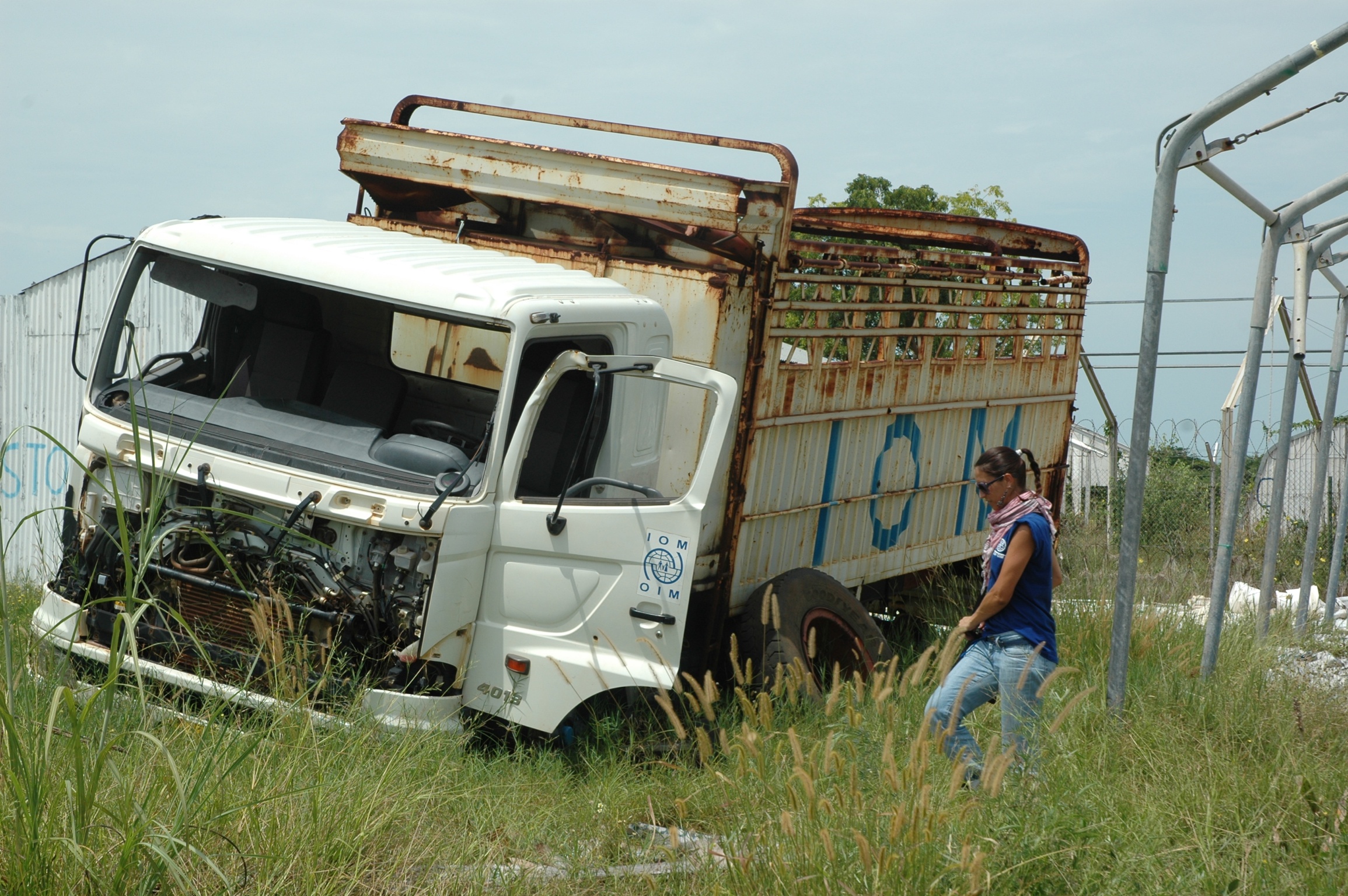
Camion IOM distrutto

A Malakal tutto è andato distrutto anche i magazzini dell’UNICEF dove veniva stoccato il cibo, i camion dell’IOM (International Organization for Migration, un’agenzia dell’ONU che si occupa anch’essa di aiuti)  e parecchie attrezzature. Andati in malora perfino gli impianti per la purificazione dell’acqua. Vandalizzata anche la sede dell’organizzazione per l’infanzia.

[embedplusvideo height=”470″ width=”590″ editlink=”http://bit.ly/YEWf6g” standard=”http://www.youtube.com/v/GcK5FgYOAvI?fs=1″ vars=”ytid=GcK5FgYOAvI&width=590&height=470&start=&stop=&rs=w&hd=0&autoplay=0&react=1&chapters=&notes=” id=”ep2334″ /]

[embedplusvideo height=”470″ width=”590″ editlink=”http://bit.ly/1uwCRWV” standard=”http://www.youtube.com/v/nS5fSB5C-ek?fs=1&vq=hd720″ vars=”ytid=nS5fSB5C-ek&width=590&height=470&start=&stop=&rs=w&hd=1&autoplay=0&react=1&chapters=&notes=” id=”ep5732″ /]

Uscire da questo tunnel non sarà facile. I colloqui di pace ad Addis Abeba si trascinano stancamente. La lotta pr il potere tra il presidente Salva Kiir e i suoi dinka (non tutti compatti dietro di lui per, la verità) e i nuer di Riek Machar, si è arricchita di un terzo protagonista lo shilluk Lam Akol, attualmente agli arresti domiciliari a Juba. Lam Akol, nella disputa tra Salva e Riek, si è sempre mantenuto neutrale, ma ora che il presidente l’ha messo sotto custodia potrebbe scappare e, una volta in salvo, lanciare la sua propria ribellione o schierarsi con i nuer. A questo punto per il Sud Sudan non si potrete più parlare di prospettive di pace ma di una nuova catastrofe.

Massimo A. Alberizzi
massimo.alberizzi@gmail.com
twitter @malberizzi

Autobus contro una mina in Guinea Bissau: oltre 20 morti

0

Africa ExPress
29 settembre 2014

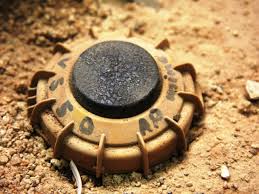
Almeno venti persone sono rimaste uccise in Guinea Bissau quando un bus ha colpito inavvertitamente una mina.  Fonti ufficiali hanno asserito che probabilmente la mina si trova lì dal lontano 1970, quando si combatteva la guerra per l’indipendenza da Portogallo, che il Paese raggiunse dopo la caduta del regime del dittatore Salazar, solamente il 10 settembre 1974.

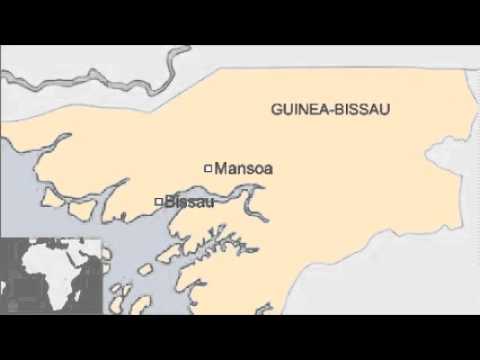
mappa 2L’esplosione è avvenuta venerdì, nel nord della Guinea Bissau, a 60 chilometri dalla capitale, quando il veicolo era in viaggio tra Bissora ed Encheia. I passeggeri stavano andando a un funerale.

Fonti della polizia che hanno chiesto di mantenere l’anonimato, hanno riferito ai reporter della BBC che diciannove persone hanno perso la vita sul colpo al momento dell’esplosione, mentre altre due o tre sono morte  durante la notte  per le ferite riportate.

Nessun commento, per ora, da parte del nuovo governo, che si è insediato solamente qualche mese fa, dopo le elezioni che si sono tenute all’inizio dell’anno. Un governo eletto democraticamente, dopo l’ultimo colpo di Stato del 2012.

Dall’indipendenza, nessun presidente è riuscito a portare a termine il suo mandato.  Instabilità, colpi di Stato hanno preso sempre il sopravvento.

MinaIl nuovo governo cerca di mettere in atto una serie di riforme che dovrebbero portare nuova vita in un’economia in totale declino e trasformare il Paese in uno Stato di diritto.

La Guinea Bissau è a metà strada tra il Brasile e la Spagna e il narcotraffico ( soprattutto cocaina) fa  tappa nel Paese. Nella capitale Bissau la corruzione è la moneta corrente.

Africa ExPress


Nigeria, arrestato un capo di Boko Haram e liberata una delle ragazze rapite

1

Nostro Servizio Particolare
Cornelia I. Toelgyes
Quartu Sant’Elena, 28 settembre 2014

shekauL’esercito del Camerun ha arrestato Abar Kali, conosciuto anche come Mustapha Umar, uno  dei comandanti di Boko Haram. Insieme a lui sono stati catturati altri due militanti e i soldati camerunensi hanno anche sequestrato un importante quantitativo di armi e munizioni.

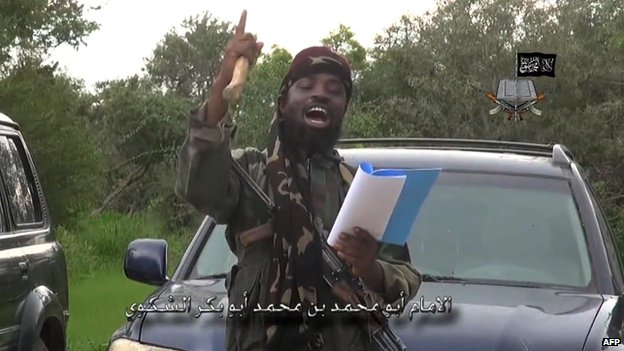
Anche l’esercito nigeriano esulta –  queste notizie vanno sempre prese con la dovuta cautela, come lo conferma anche Will Ross, reporter della BBC, perché sono difficilmente controllabili. I militari hanno dichiarato che ben 260 militanti islamisti si sarebbero arresi alle forze nigeriane. Centoprentacinque a Biu, città nello Stato del Borno, mentre altri 133 da qualche parte nel Nord-est del Paese. Dove, non è stato dato di sapere. “Durante una sparatoria è stato ucciso anche un uomo di nome Mohammed Bashir, che in molti video si spacciava per Abubakar Shekau, il leader dei Boko Haram”, ha annunciato Chris Olukolade, portavoce del Ministero della Difesa nigeriano.

ragazze sequestrateIn un comunicato del 13 agosto scorso l’esercito nigeriano avevo reso noto che durante uno scontro a fuoco  nella foresta di Sambisa era stato “forse” ucciso Shekau.

Il giornalista nigeriano, Ahmad Salkide, che è in contatto diretto con i vertici dei terroristi ha negato categoricamente che Shekau sia morto. “No non è vero,  gode ottima salute. L’ho anche incontrato mentre erano in atto i colloqui con il governo nigeriano, esponenti della Commissione della Croce Rossa Internazionale e due leader anziani dei Boko Haram”.

Il sanguinario leader dei Boko Haram è stato ucciso “almeno” tre volte.  Sta di fatto che ogni volta risuscita più forte e più potente di prima. Secondo alcune fonti ufficiali si ritiene che il nome di Shekau venga adottato da leader di diverse frange della setta islamista.

Miliziano con RPGIeri mattina dall’aeroporto Nnamdi Azikiwe  di Abuja è partito alla volta di Mosca l’ultimo gruppo antiterrorismo nigeriano. In Russia continueranno l’addestramento assieme a loro compagni che li hanno preceduti. In tutto sono quattrocento, tra poliziotti, militari, personale addetto alla sicurezza.  La scelta non è casuale. Gli Stati Uniti, la Gran Bretagna e altri Paesi occidentali non hanno manifestato entusiasmo per aiutare la Nigeria nella lotta contro i Boko Haram. C’è chi sostiene che in particolare USA e GB non vogliano fornire armi alle forze armate nigeriane, corrotte e inquinate: temono che l’arsenale potrebbe finire direttamente nelle mani dei terroristi.

[embedplusvideo height=”370″ width=”490″ editlink=”http://bit.ly/1rlL2nI” standard=”http://www.youtube.com/v/wrfWS_vL0D4?fs=1&vq=hd720″ vars=”ytid=wrfWS_vL0D4&width=490&height=370&start=&stop=&rs=w&hd=1&autoplay=0&react=1&chapters=&notes=” id=”ep4189″ /]

Giovedì scorso è stata liberata la prima delle studentesse sequestrate il 15 aprile scorso.  Ha passato la prima notte in libertà urlando: “Vogliono uccidermi, vogliono uccidermi”, ha riferito il reverendo  Enoch Mark, che è accanto a lei dal momento della sua liberazione. Pare che la ragazza sia originaria del Ciad. Suo padre, un falegname, si è trasferito a Chibok qualche anno fa con la famiglia. La studentessa dice di chiamarsi  Susannah Ishaya, ma non si è ancora certi della sua identità, visto che non parla la lingua locale.

[embedplusvideo height=”370″ width=”490″ editlink=”http://bit.ly/1rlLbrk” standard=”http://www.youtube.com/v/3Cu5xYLdaJU?fs=1&vq=hd720″ vars=”ytid=3Cu5xYLdaJU&width=490&height=370&start=&stop=&rs=w&hd=1&autoplay=0&react=1&chapters=&notes=” id=”ep7863″ /]

“Stiamo facendo le verifiche del caso”, ha spiegato il capo della comunità di Chibok, Pogu Bitrus, aggiungendo: “Bisogna essere cauti in questi casi, anche se nella lista delle ragazze rapite è incluso il nome di una  Susannah Ishaya”.

Cornelia I. Toelgyes
corneliacit@hotmail.it
twitter: @cotoelgyes