



 Dal New York Times
Mark Mazzetti*, Julian E. Barnes**, Edward Wong*** e Ronen Bergman****
Washington/Tel Aviv
Mentre gli Stati Uniti e Israele si preparavano a entrare in guerra con l’Iran, il capo del Mossad, il servizio di intelligence estero israeliano, si è era recato dal primo ministro Benjamin Netanyahu con un piano.
A pochi giorni dall’inizio della guerra, ha affermato David Barnea, capo del Mossad, il suo servizio sarebbe stato probabilmente in grado di galvanizzare l’opposizione iraniana, scatenando rivolte e altri atti di ribellione che avrebbero potuto persino portare al crollo del governo iraniano.
Barnea ha presentato la proposta anche ad alti funzionari dell’amministrazione Trump durante una visita a Washington a metà gennaio.
Netanyahu ha adottato il piano. Nonostante i dubbi sulla sua fattibilità tra gli alti funzionari americani e alcuni di altre agenzie di intelligence israeliane, sia lui che il presidente Trump sembravano condividere una visione ottimistica. Uccidere i leader iraniani all’inizio del conflitto, seguito da una serie di operazioni di intelligence volte a incoraggiare un cambio di regime, pensavano, avrebbe potuto portare a una rivolta di massa che avrebbe potuto determinare una rapida fine della guerra.
“Prendete il controllo del vostro governo: sarà vostro”, ha detto Trump agli iraniani nel suo discorso iniziale all’inizio della guerra, dopo aver detto loro che avrebbero dovuto però prima cercare riparo dai bombardamenti.
A tre settimane dall’inizio del conflitto, non si è ancora concretizzata una rivolta iraniana. Le valutazioni dei servizi segreti americani e israeliani hanno concluso che il governo teocratico iraniano è indebolito ma intatto, e che la diffusa paura delle forze militari e di polizia iraniane ha smorzato le prospettive sia di una ribellione nascente nel Paese sia di incursioni transfrontaliere da parte delle milizie etniche al di fuori dell’Iran.
La convinzione che Israele e gli Stati Uniti potessero contribuire a istigare una rivolta diffusa è stata un errore fondamentale nei preparativi per una guerra che si è estesa in tutto il Medio Oriente. Invece di implodere dall’interno, il governo iraniano ha resistito e ha intensificato il conflitto, sferrando attacchi e contrattacchi contro basi militari, città e navi nel Golfo Persico, e contro vulnerabili impianti petroliferi e di gas.
Questo resoconto si basa su interviste condotte a oltre una decina di funzionari americani, israeliani e di altre nazionalità, alcuni ancora in servizio e altri ormai ex, la maggior parte dei quali ha parlato sotto forma di anonimato per discutere questioni di sicurezza nazionale e di intelligence durante un conflitto. Il New York Times ha intervistato funzionari con svariate opinioni sulla probabilità di una rivolta.
Dal primo discorso di Trump, gran parte dei funzionari americani hanno smesso di parlare pubblicamente delle prospettive di una rivolta all’interno dell’Iran, ma alcuni continuano a sperare che possa concretizzarsi. Sebbene la sua retorica sia diventata più moderata, Netanyahu continua ad affermare che la campagna aerea americana e israeliana sarà supportata da forze di terra.
“Non si possono fare rivoluzioni dall’alto”, ha detto durante una conferenza stampa giovedì. E ha aggiunto: “Ci deve essere anche una componente di terra. Ci sono molte possibilità per questa componente di terra, e mi prendo la libertà di non condividere con voi tutte queste possibilità”.
Netanyahu ha anche aggiunto che “è troppo presto per dire se il popolo iraniano sfrutterà le condizioni che stiamo creando affinché scenda in piazza. Spero che sia così. Stiamo lavorando a tal fine, ma alla fine dipenderà solo da loro”.
Dietro le quinte, tuttavia, Netanyahu ha espresso frustrazione per il fatto che le promesse del Mossad di fomentare una rivolta in Iran non si siano concretizzate. In una riunione sulla sicurezza tenutasi pochi giorni dopo l’inizio della guerra, il primo ministro ha sfogato la sua rabbia dicendo che Trump avrebbe potuto decidere di porre fine alla guerra da un giorno all’altro e che le operazioni del Mossad non avevano ancora dato i loro frutti.
Nel periodo precedente al conflitto, secondo quanto riferito da funzionari americani e israeliani attuali ed ex, Netanyahu ha fatto leva sull’ottimismo del Mossad riguardo alla possibilità di una rivolta iraniana per aiutare a convincere Trump che provocare il crollo del governo iraniano fosse un obiettivo realistico.
Molti alti funzionari americani, così come gli analisti dell’agenzia di intelligence militare delle Forze di Difesa Israeliane, l’AMAN, hanno guardato con scetticismo al piano israeliano di una rivolta di massa durante il conflitto. I vertici militari statunitensi hanno detto a Trump che gli iraniani non sarebbero scesi in piazza a protestare mentre gli Stati Uniti e Israele sganciavano bombe. I funzionari dell’intelligence avevano valutato che la possibilità di una rivolta di massa che minacciasse il governo teocratico fosse bassa e dubitavano che l’attacco statunitense-israeliano potesse scatenare una guerra civile.
La Casa Bianca non ha risposto a una richiesta di commento. Tuttavia, un alto funzionario dell’amministrazione ha osservato che nelle sue prime dichiarazioni dopo l’inizio della guerra, Trump aveva detto agli iraniani di rimanere nelle loro case e li aveva esortati a scendere in piazza solo dopo la fine della campagna aerea.
“Quando avremo finito, prendete il controllo del vostro governo”, aveva precisato Trump in quel momento.
Nate Swanson, ex funzionario del dipartimento di Stato e della Casa Bianca che fino a luglio faceva parte del team negoziale dell’amministrazione Trump sull’Iran, guidato da Steve Witkoff, ha affermato di non aver mai visto, nei suoi molti anni di lavoro sulla politica iraniana, un “piano serio” all’interno del governo statunitense volto a promuovere una rivolta in Iran.
“Molti manifestanti non scendono in strada perché rischiano di essere uccisi”, ha detto Swanson, ora membro dell’Atlantic Council. “Verranno massacrati. Questa è un punto importante. Ma il seconda è che c’è una buona fetta di persone che vuole semplicemente una vita migliore, e che al momento è semplicemente messa da parte. A loro non piace il regime, ma non vogliono morire opponendosi ad esso. Quel 60 per cento resterà a casa”.
Ha aggiunto: “Ci sono ancora persone ferventemente contrarie al regime, ma non sono armate e non stanno portando la maggioranza della popolazione in piazza”.
Trump sembrava essere giunto alla stessa conclusione a due settimane dall’inizio della guerra. Il 12 marzo ha osservato che l’Iran ha forze di sicurezza nelle strade “che mitragliano la gente se vuole protestare”.
“Quindi penso davvero che sia un grosso ostacolo da superare per chi non ha armi”, ha detto su Fox News Radio. “Penso che sia davvero un grande impedimento. Quindi succederà, ma probabilmente non sarà immediato».
L’opzione curda
Sebbene molti dei dettagli dei piani del Mossad rimangano segreti, uno degli elementi prevedeva il sostegno a un’invasione da parte di gruppi di milizie curde iraniane con base nel nord dell’Iraq.
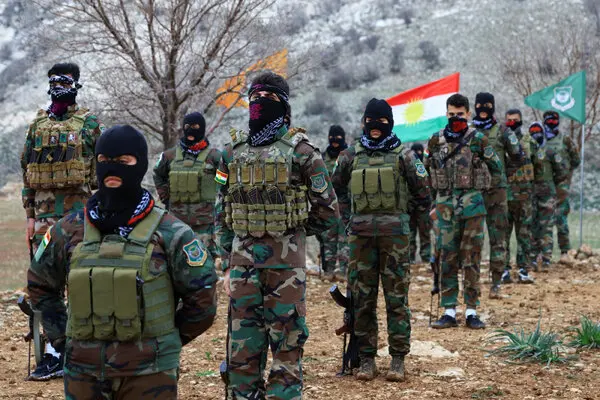
Il Mossad ha legami di lunga data con i gruppi curdi, e funzionari americani hanno affermato che sia la CIA che il Mossad hanno fornito armi e altro sostegno alle forze curde negli ultimi anni. La CIA aveva già l’autorità per sostenere i combattenti curdi iraniani e aveva fornito armi e consulenza ben prima dell’attuale guerra.
Durante i primi giorni di guerra, jet e cacciabombardieri israeliani hanno martellato obiettivi militari e di polizia nel nord-ovest dell’Iran, in parte per aiutare a spianare la strada ai ribelli curdi.
Durante un briefing telefonico del 4 marzo, a un portavoce militare israeliano è stato chiesto se Israele stesse effettuando intensi bombardamenti nell’Iran occidentale per aiutare un’invasione curda. Il portavoce, il tenente colonnello Nadav Shoshani, ha dichiarato: “Abbiamo operato in modo molto massiccio nell’Iran occidentale per indebolire le capacità del regime iraniano, aprire la strada verso Teheran e garantire la libertà di manovra. Questo è stato il nostro obiettivo in quella zona”.
Ma i funzionari americani non erano più entusiasti della loro idea già ben prima della guerra, cioè quella di utilizzare i curdi come forza proxy, un cambiamento che ha creato tensione con le loro controparti israeliane.
A una settimana dall’inizio del conflitto, il 7 marzo, Trump ha dichiarato di aver detto esplicitamente ai leader curdi di non inviare milizie nel Paese. “Non voglio che i curdi entrino”, ha detto ai giornalisti. “Non voglio vedere i curdi feriti o uccisi”.
Poco dopo la diffusione di notizie secondo cui le milizie curde avrebbero potuto unirsi alla campagna, Bafel Talabani, presidente dell’Unione Patriottica del Kurdistan, uno dei principali partiti politici curdi iracheni, ha dichiarato in un’intervista a Fox News che non c’erano piani del genere in corso. Un’avanzata curda, ha aggiunto, potrebbe avere l’effetto opposto a quello desiderato.
“Si potrebbe addirittura sostenere che in realtà potrebbe essere un danno”, ha detto, aggiungendo che gli iraniani sono molto nazionalisti. “Credo che se temono che l’arrivo di curdi da altre parti possa causare una divisione o una frammentazione del loro Paese, questo potrebbe in realtà unificare il popolo contro questo movimento separatista”.
La Turchia ha avvertito l’amministrazione Trump di non sostenere alcuna azione curda. Il messaggio è stato trasmesso dal ministro degli Esteri turco, Hakan Fidan, al segretario di Stato, Marco Rubio, in una recente conversazione, ha affermato un diplomatico di Ancara. La Turchia, alleata della NATO, si oppone da tempo a qualsiasi operazione da parte dei curdi armati, poiché sta lottando contro i separatisti all’interno dei propri confini.
La rivolta che deve ancora arrivare
Funzionari americani informati sulle valutazioni dell’intelligence prima della guerra hanno affermato che la CIA ha valutato una serie di possibili sviluppi all’interno dell’Iran una volta iniziato il conflitto. Le agenzie di intelligence hanno ritenuto che un crollo totale del governo iraniano fosse un esito relativamente improbabile.
Altri funzionari statunitensi a conoscenza delle informazioni dei servizi segreti hanno affermato che anche quando il governo è sotto pressione, come è avvenuto durante le proteste di massa nel Paese a gennaio, in cui sono stati uccisi migliaia di manifestanti, è riuscito a sedare le rivolte in tempi relativamente brevi.
Le valutazioni dei servizi segreti americani hanno suggerito che elementi armati del governo iraniano potrebbero rivoltarsi gli uni contro gli altri, o intraprendere azioni che potrebbero scatenare una guerra civile. Tuttavia, secondo le conclusioni dei rapporti, è più probabile che tali fazioni sostengano gruppi rivali di leader religiosi, piuttosto che rappresentare una qualche forma di movimento democratico.
L’esito più probabile, tuttavia, era che gli elementi della linea dura dell’attuale governo avrebbero mantenuto il controllo delle leve del potere, secondo quanto riportato.
Una portavoce della CIA ha rifiutato di commentare. Il Mossad e le Forze di Difesa Israeliane (IDF) hanno rifiutato ugualmente.
I servizi segreti israeliani hanno a lungo valutato la possibilità di fomentare una rivolta all’interno dell’Iran, sia come operazione autonoma sia subito dopo l’inizio di una campagna militare, ma fino a pochissimo tempo fa avevano scartato tale ipotesi.
In qualità di principale servizio israeliano responsabile delle operazioni all’estero, il Mossad era incaricato della pianificazione.

Shahar Koifman, ex capo dell’ufficio Iran presso la Divisione di Ricerca dell’Intelligence Militare dell’IDF, ha affermato che Israele ha valutato varie idee per cercare di indebolire o rovesciare il governo iraniano, ma che, a suo parere, erano destinate a fallire sin dall’inizio. Ha aggiunto di non ritenere che rovesciare il governo iraniano fosse un obiettivo realizzabile nell’ambito del conflitto attuale.
Il predecessore di Barnea al Mossad, Yossi Cohen, aveva deciso che cercare di fomentare una ribellione all’interno dell’Iran fosse una perdita di tempo e aveva ordinato che le risorse dedicate alla questione fossero ridotte al minimo. Durante il mandato di Cohen, terminato nel 2021, il Mossad ha calcolato quanti cittadini del Paese avrebbero dovuto partecipare alle proteste affinché queste potessero rappresentare una vera minaccia per il governo iraniano, confrontando le stime con la portata delle proteste effettive dalla rivoluzione iraniana del 1979.
“Ci siamo chiesti se potessimo colmare questo divario”, ha dichiarato Cohen nel 2018, “e siamo giunti alla conclusione che non potevamo”.
La strategia del Mossad in quel periodo era invece quella di cercare di indebolire il governo fino a quando non si fosse sostanzialmente arreso alle richieste israeliane e americane, utilizzando una combinazione di sanzioni economiche paralizzanti e operazioni volte ad assassinare scienziati nucleari e leader militari iraniani e a sabotare gli impianti nucleari.
Nell’ultimo anno, con l’aumentare della probabilità di un’azione militare israeliana contro l’Iran, Barnea ha invertito l’approccio del Mossad, dedicando le risorse dell’agenzia a piani che potessero portare al rovesciamento del governo di Teheran in caso di guerra.
Negli ultimi mesi, secondo i funzionari, Barnea è giunto a credere che il Mossad potesse potenzialmente iniziare a scatenare rivolte in tutto l’Iran dopo diversi giorni di intensi attacchi aerei israeliani e americani e l’assassinio di alti leader iraniani.
Dopo gli attacchi e gli omicidi dei primi giorni di guerra, la rivolta non è scoppiata. Ma i funzionari israeliani dicono di non aver ancora perso la speranza.
“Penso che abbiamo bisogno di truppe sul campo, ma devono essere truppe iraniane”, ha dichiarato domenica alla CNN Yechiel Leiter, ambasciatore di Israele negli Stati Uniti, quando gli è stato chiesto come finirà la guerra. “E penso che stiano arrivando”, ha poi concluso.
Mark Mazzetti*, Julian E. Barnes**, Edward Wong*** e Ronen Bergman****
*Mark Mazzetti è un giornalista investigativo con sede a Washington, D.C., specializzato in sicurezza nazionale, intelligence e affari esteri. Ha scritto un libro sulla CIA.
**Julian E. Barnes si occupa delle agenzie di intelligence statunitensi e delle questioni di sicurezza internazionale per il Times. Scrive di questioni di sicurezza da oltre vent’anni.
***Edward Wong si occupa di affari internazionali, politica estera degli Stati Uniti e Dipartimento di Stato per il Times.
****Ronen Bergman è redattore del New York Times Magazine, con sede a Tel Aviv.
L’articolo originale è questo:
President Trump’s hopes that an Israeli plan to ignite an internal uprising against Iran’s theocratic government could bring the war to a swift end have so far been dashed.


Mark MazzettiJulian E. BarnesEdward Wong and Ronen Bergman
Mark Mazzetti, Julian E. Barnes and Edward Wong reported from Washington, and Ronen Bergman from Tel Aviv.
As the United States and Israel prepared to go to war with Iran, the head of Mossad, Israel’s foreign intelligence service, went to Prime Minister Benjamin Netanyahu with a plan.
Within days of the war’s beginning, said David Barnea, the Mossad chief, his service would likely be able to galvanize the Iranian opposition — igniting riots and other acts of rebellion that could even lead to the collapse of Iran’s government. Mr. Barnea also presented the proposal to senior Trump administration officials during a visit to Washington in mid-January.
Mr. Netanyahu adopted the plan. Despite doubts about its viability among senior American officials and some officials in other Israeli intelligence agencies, both he and President Trump seemed to embrace an optimistic outlook. Killing Iran’s leaders at the outset of the conflict, followed by a series of intelligence operations intended to encourage regime change, they thought, could lead to a mass uprising that might bring about a swift end to the war.
“Take over your government: It will be yours to take,” Mr. Trump told Iranians in his initial address at the war’s start, after saying they should first seek shelter from the bombing.

Three weeks into the war, an Iranian uprising has not yet materialized. American and Israeli intelligence assessments have concluded that the theocratic Iranian government is weakened but intact, and that widespread fear of Iran’s military and police forces has dampened prospects both for nascent rebellion in the country and for ethnic militias outside of Iran to launch cross-border incursions.
The belief that Israel and the United States could help instigate widespread revolt was a foundational flaw in the preparations for a war that has spread across the Middle East. Instead of imploding from within, Iran’s government has dug in and escalated the conflict, striking blows and counterblows against military bases, cities and ships around the Persian Gulf, and against vulnerable oil and gas installations.
This account is based on interviews with more than a dozen current and former American, Israeli and other foreign officials, most of whom spoke on the condition of anonymity to discuss national security and intelligence issues during a war. The New York Times interviewed officials with a variety of views on the likelihood of an uprising.
Since Mr. Trump’s first speech, American officials have largely abandoned speaking publicly about the prospects for revolt inside of Iran, yet some remain hopeful that one could materialize. Though his rhetoric has become more tempered, Mr. Netanyahu still says the American and Israeli air campaign will be aided by forces on the ground.

Behind the scenes, however, Mr. Netanyahu has expressed frustration that Mossad’s promises to foment revolt in Iran have not materialized. In one security meeting days after the war began, the prime minister vented that Mr. Trump might decide to end the war any day and that Mossad’s operations had yet to bear fruit.
In the run-up to the war, current and former American and Israeli officials said, Mr. Netanyahu invoked Mossad’s optimism about a possibility of an Iranian uprising to help convince Mr. Trump that bringing about the collapse of the Iranian government was a realistic goal.
Many senior American officials, as well as intelligence analysts at the Israel Defense Forces military intelligence agency, AMAN, viewed the Israeli plan for a mass uprising during the conflict with skepticism. U.S. military leaders told Mr. Trump that Iranians would not come out to protest while the United States and Israel were dropping bombs. Intelligence officials had assessed that the possibility of a mass uprising threatening the theocratic government was low, and doubted that the U.S.-Israeli attack would ignite any kind of civil war.
The White House did not respond to a request for comment. But a senior administration official noted that in Mr. Trump’s initial remarks after the beginning of the war he told Iranians to remain in their homes and urged them to take to the streets only after the air campaign was over.
“When we are finished, take over your government,” Mr. Trump said at the time.

Nate Swanson, a former State Department and White House official who was on the Trump administration’s Iran negotiating team led by Steve Witkoff until July, said he had never seen a “serious plan” to promote an uprising in Iran within the U.S. government in his many years working on Iran policy.
“A lot of protesters are not coming into the street because they’ll get shot,” said Mr. Swanson, now at the Atlantic Council. “They’re going to get slaughtered. That’s one thing. But the second thing is that there’s a good chunk of people who just want a better life, and they’re just sidelined right now. They don’t like the regime, but they don’t want to die opposing it. That 60 percent is going to stay home.”
He added, “You still have fervent anti-regime folks, but they’re not armed, and they’re not bringing the majority of the population into the streets.”
Mr. Trump appeared to have arrived at the same conclusion two weeks into the war. On March 12, he noted that Iran has security forces in the streets “machine-gunning people down if they want to protest.”
“So I really think that’s a big hurdle to climb for people that don’t have weapons,” he said on Fox News Radio. “I think that’s a very big hurdle. So it’ll happen, but it probably will be maybe not immediately.”
The Kurdish Option
While many of the specifics of Mossad’s plans remain secret, one element included supporting an invasion by Iranian Kurdish militia groups based in northern Iraq.
Mossad has longstanding ties with Kurdish groups, and American officials have said that both the C.I.A. and Mossad have given arms and other support to Kurdish forces in recent years. The C.I.A. had existing authorities to support Iranian Kurdish fighters, and had provided arms and advice well before the current war.
During the first days of the war, Israeli jets and bombers pounded Iranian military and police targets in northwest Iran in part to help pave the way for the Kurdish forces.
During a telephone briefing on March 4, an Israeli military spokesman was asked whether Israel was carrying out intense bombings in western Iran to help a Kurdish invasion. The spokesman, Lt. Col. Nadav Shoshani, said, “We’ve been operating very heavily in western Iran to degrade the Iranian regime’s capabilities and to open up the way to Tehran, and to create freedom of operations. That’s been our focus there.”
But American officials are no longer enthusiastic about their idea from well before the war of using the Kurds as a proxy force, a shift that has created tension with their Israeli counterparts.

A week into the war, on March 7, Mr. Trump said he had explicitly told Kurdish leaders not to send militias into the country. “I don’t want the Kurds going in,” he told reporters. “I don’t want to see the Kurds get hurt, get killed.”
Soon after reports emerged that Kurdish militias might join the campaign, Bafel Talabani, the president of the Patriotic Union of Kurdistan, one of the main Iraqi Kurdish political parties, said in an interview on Fox News that no such plans were in the works. A Kurdish advance, he added, might have the opposite of its intended effect.
“You could argue that that’s actually a detriment,” he said, adding that Iranians are very nationalistic. “I believe if they fear that Kurds coming in from elsewhere will cause a split or a splintering of their country, this may actually unify the people against this separatist movement.”
Turkey has warned the Trump administration not to support any Kurdish action. The message was delivered by the Turkish foreign minister, Hakan Fidan, to Secretary of State Marco Rubio in a recent conversation, a Turkish diplomat said. Turkey, a NATO ally, has long been opposed to any operations by armed Kurds since it is grappling with Kurdish separatists inside its own borders.
The Uprising That Has Yet to Come
American officials briefed on intelligence assessments before the war said the C.I.A. evaluated a variety of possible developments inside Iran once the conflict began. Intelligence agencies considered a full collapse of the Iranian government to be a relatively unlikely outcome.
Other U.S. officials familiar with the intelligence said that even when the government is under pressure, as it was during mass protests in the country in January in which thousands of protesters were killed, it managed to quell uprisings relatively quickly.
The American intelligence assessments have suggested that armed elements of the Iranian government could turn on one another, or take action that might spark a civil war. But those factions are more likely to back rival groups of religious leaders, rather than represent any sort of democratic movement, the reports concluded.
The most likely outcome, however, was that hard-line elements of the existing government would maintain control over the levers of power, the reports said.
A spokeswoman for the C.I.A. declined to comment. The Mossad and the I.D.F. declined to comment
Israeli intelligence agencies have long examined the possibility of instigating revolt inside Iran as its own operation or shortly after the beginning of a military campaign, but until very recently dismissed the prospects.
As Israel’s main service responsible for foreign operations, Mossad was in charge of the planning.
Shahar Koifman, a former head of the Iran desk at the I.D.F.’s Military Intelligence Research Division, said Israel had explored various ideas to try to undermine or topple the Iranian government, but that in his opinion they were doomed to fail from the start. He said he did not believe that bringing down the Iranian government was an achievable goal of the current conflict.

David Barnea, the Mossad chief, told Mr. Netanyahu that his service would likely be able to galvanize the Iranian opposition.Credit…Amir Cohen/Reuters
Mr. Barnea’s predecessor at Mossad, Yossi Cohen, decided that trying to foment rebellion inside Iran was a waste of time and ordered that the resources devoted to the matter be reduced to a minimum. During Mr. Cohen’s tenure, which ended in 2021, Mossad calculated how many of the country’s citizens would need to participate in protests for them to truly threaten the Iranian government, comparing the estimates to the size of actual protests since the 1979 Iranian revolution.
“We wondered if we could bridge this gap,” Mr. Cohen said in 2018, “and we came to the conclusion that we couldn’t.”
Instead, Mossad’s strategy during that period was to try to weaken the government until it essentially surrendered to Israeli and American demands — using a combination of crippling economic sanctions and operations to assassinate Iranian nuclear scientists and military leaders and sabotage nuclear facilities.
Over the past year, as the prospect of Israeli military action against Iran became more likely, Mr. Barnea reversed Mossad’s approach, devoting the agency’s resources to plans that could lead to toppling the government in Tehran in the event of a war.
In recent months, according to officials, Mr. Barnea came to believe that Mossad could potentially begin igniting riots around Iran after several days of intense Israeli and American airstrikes and the assassination of senior Iranian leaders.
After the strikes and assassinations of the war’s earliest days, the uprising did not come. But Israeli officials say they have yet to give up hope.
“I think that we need boots on the ground, but they’ve got to be Iranian boots,” Yechiel Leiter, Israel’s ambassador to the United States, said on CNN on Sunday, when asked how the war will end. “And I think they’re coming.”
Mark Mazzetti*, Julian E. Barnes**, Edward Wong*** e Ronen Bergman****
*Mark Mazzetti is an investigative reporter based in Washington, D.C., focusing on national security, intelligence, and foreign affairs. He has written a book about the C.I.A.
**Julian E. Barnes covers the U.S. intelligence agencies and international security matters for The Times. He has written about security issues for more than two decades.
***Edward Wong reports on global affairs, U.S. foreign policy and the State Department for The Times.
****Ronen Bergman is a staff writer for The New York Times Magazine, based in Tel Aviv.