Our Special Correspondent
Saba Makeda
Somewhere in Eritrea, 3rd January 2014
(2 – continues)
In the first part of this story Saba Makeda
writes about the failed Eritrea Constitution
that the dictator didn’t want to implement.
You can find the article here
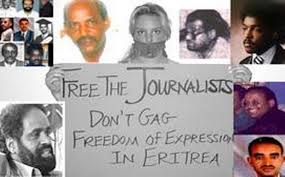
The demise of the independent press
The relationship between the state and private media had always been difficult and based on control and mistrust so much so that as early as 1990 the Mr Taha Mohmmed Nur, a former liberation fighter, and a respected elder gave up on efforts to establish a newspaper because the Ministry of Information was insisting to read everything before it was published.
Despite the difficulties by 2001 the Eritrean private press was very actively reporting on the issues affecting Eritrean in particular the issues raised by
(a) the students;
(b) the group of Eritrean intellectuals that became known as the G 13 and later the issues raised by
(c) 15 politicians that became known as the G 15.
At first, the government reacted by trying to stifle the media by arresting and conscripting the journalist. By June 2001 the Committee to Protect Journalist wrote to the Minister of Justice (Ms Fawzia Hashim) asking the whereabouts of 15 Eritrean Journalists who were believed to have been arrested or forcibly conscripted.
Eritrea is presently a country where the only way for people to know what is going on is by word of mouth – bado seleste (03) , bado tsciate (09) ; or arbi harenet ( freedom Friday) . When the volcano exploded in the Danakil depression in 20012, most Eritreans heard the news from the international media or from relatives in the areas affected.
Saba Makeda
Makedasaba@ymail.com
(2 – continues)
Sostieni il nostro giornalismo indipendente
Ogni contributo aiuta a mantenere l’informazione libera.
Africa ExPress Pretoria, 2 luglio 2026 Migliaia e migliaia di espatriati africani hanno lasciato il…
Speciale per Africa ExPress Cornelia I. Toelgyes 30 giugno 2026 La “giustizia” dell’Arabia Saudita non…
From our correspondent in the West Bank Eyad Hamad June, 26th 2026 The occupation of…
Dal Nostro Redattore Difesa Antonio Mazzeo Giugno 2026 Se le bugie hanno le gambe corte,…
Speciale Per Africa ExPress Emanuela Ulivi 27 giugno 2026 Il 21 giugno scorso si è…
Speciale Per Africa ExPress Chiara Bazzani Edimburgo, 26 giugno 2026 Negli ultimi giorni l'Inghilterra è…