Israel: military occupation in Gaza
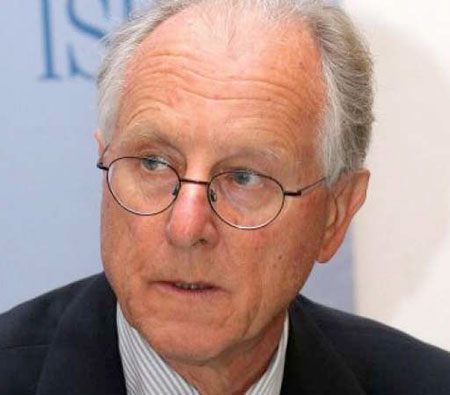
Giuseppe (Ino) Cassini*
August 2025
Italian version of this story is here
When Theodore Herzl founded the Zionist movement in 1897, he dreamed of a Jewish state as “Europe’s bulwark against Asia, civilization’s outpost against barbarism.” The “founding fathers” followed that line.
Ben Gurion: “We must fight against the spirit of the Levant that corrupts individuals and society, and preserve the authentic Jewish values established in the diaspora.” Abba Eban: “The goal is to instill a Western spirit, instead of allowing ourselves to be drawn toward an unnatural Orientalism.”
Finally, Golda Meir’s denialism (interview with the Sunday Times on June 15, 1969): “There are no Palestinians. It is not as if there is a Palestinian people here who consider themselves as such and we have come to throw them out. The Palestinians do not exist” (sic). In truth, until the early 1900s, there were half a million Palestinians, compared to about 50,000 Jews. Then came the survivors of the pogroms and concentration camps, but even in 1945 there were only 600,000 Jews (equal to the number residing today—irony of numbers—in the Occupied Territories).
In 2017, Israel celebrated the centenary of the “Balfour Declaration,” a letter in which the British Foreign Minister promised Lord Rothschild a Jewish state in Palestine. This was the comment by Gideon Levy, columnist for Haaretz: “Nothing like this had ever happened before: an empire [Great Britain] promising a land that was not its own [Palestine] to a people who did not live there [the Jews] without asking permission from those who did live there [the Palestinians].”
Gideon Levy’s irony did justice to the false mantra: “A land without a people for a people without a land.” The tragedy of the Nakba in 1948—and then the military victories of 1956, 1967, and 1973—allowed Israel to embark on an all-out immigration policy. A million Jews, real or presumed, generally unfamiliar with Judaism, arrived from the USSR alone. Israel, ruled by Ashkenazim, did everything it could to eradicate the Sephardic and Mizrahi communities from Arab countries.
Ezra Ben Hakham Eliyahu denounced this in 1978: “Mass immigration to Israel has uprooted the Sephardic communities. They have lost their countries, their property, their customs, their language, their entire cultural heritage.” And a Moroccan Sephardic Jew, Reuben Abarjel, lamented: “No Arab government has ever exercised violence against the Mizrahim similar to that of the Ashkenazi regime, which kidnapped children to give them up for adoption and sterilized women deemed incapable of improving the ‘Jewish gene.’ ”
The kidnapping refers to the 1950s, when 1,060 children taken from Yemen were removed from their parents and placed with Ashkenazi families. These are memories to be erased so that the “founding fathers” can continue to be seen as idealists—and many of them were.
But in fact, it was a neo-colonial operation cloaked in kibbutz rhetoric. In 1956, Israel made the unforgivable choice to join the French and British in an attempt to reclaim the Suez Canal nationalized by Nasser.
It was then clear where the young state stood: it was now a Western bridgehead, defined as “the only democracy in the Middle East.” It is true that the declaration of independence states: “Israel will guarantee complete social and political equality to all its inhabitants, regardless of religion or race.”
But in reality, it discriminates against those who are not Jewish: it has imprisoned at least 40 percent of Palestinian males at least once; it carries out targeted executions without respecting its own laws; it prohibits mixed marriages; it grants (illegal) settlers every right denied to Palestinians living (legally) in their own homes.
Looking back, it is easier to see when the path to suicide began: on November 4, 1995, with the assassination of Rabin by an extremist Jew. A few days earlier, we were at the Amman Summit, and everything pointed to imminent peace. “Peace is negotiated with enemies,” Rabin repeated, “and we will do so at any cost.” At any cost? It cost him his life. Then came a series of wasted opportunities and unprecedented violence.
March 2002. As an observer at the Arab League summit in Beirut, I saw Saudi King Abdullah present a real peace plan, approved by the entire League. Finally, I thought. No, Israel did not think so, and the Abdullah Plan was shelved.
January 2006. Free elections in Palestine and a clear victory for the Hamas party in Gaza; but Israel pushed the US and the EU to disavow the outcome, even though international observers had confirmed the full regularity of the elections. Hamas drew its conclusions. Netanyahu did the same, in his own way.
In 2012, he began to fund Hamas with money from Qatar, with the aim of weakening the PNA and dividing the Palestinian front. But Hamas diverted part of the funds to arm the Gaza Strip, and Netanyahu looked the other way: a game of poker on the edge of the precipice. Both were ready to do anything to hinder the “two peoples, two states” formula (as Ben Gurion had said: “The longer we drag it out, the more it will benefit us”).
The prime minister also turned a blind eye when, in 2023, he was warned that military exercises that were not exactly defensive were being carried out beyond the walls of Gaza.
Until the horror of October 7. It was a sort of posthumous revenge after the massacres of women and children perpetrated in 1948 in Palestinian villages—the famous massacre in Deir Yassin—by the “Stern Gang” led by Begin, then a terrorist and later prime minister.
In December 1948, Albert Einstein and Hannah Arendt co-signed a prescient letter: ‘A mixture of ultra-nationalism, religious mysticism and racial superiority has been preached in the Jewish community. In Begin’s actions, the terrorist party betrays its true character; from its actions we can judge what it will do in the future’.
It is thanks to the foresight of these two illustrious Jews that we now have a better understanding of where this Middle Eastern country, so well armed that it prefers to keep five war fronts open rather than accept coexistence with those who have always lived there, is headed.
Is it in their interest? The Israelis, protected by the US, have so far been forgiven for every violation of international law, even though the declaration of independence proclaims that “Israel will be faithful to the principles of the United Nations Charter.”
Is it possible that such a gifted people are capable of such atrocities in Gaza? Is it possible that a small state has been holding a superpower in check for decades? The Netanyahu government has opted for the solution of an apartheid “one-state” solution.
The military occupation has eroded the country from within, jeopardizing the very security it is supposed to guarantee. This has also been understood by former Knesset Speaker Avraham Burg and former Prime Minister Olmert, who have been urging for some time now to “save Israel from itself.”
Giuseppe Ino Cassini*
*Giuseppe (Ino) Cassini was an Italian diplomat and ambassador to Somalia and Lebanon. He also worked in Belgium, Algeria, Cuba, the United States, and Geneva (UN). Author of “Gli anni del declino, La politica estera del governo Berlusconi (2001-2006)” (Bruno Mondadori 2007) and the e-book “Anatomia di una guerra, Quella “stupida” guerra in Iraq (Narcissus 2013)”, he knows deep America well, the America that says: “Washington is not the solution, it is the problem.”
Translated from Italian with DeepL.com. English version edited by Ellie Spring
Speciale per Africa ExPress Cornelia I. Toelgyes 14 marzo 2026 La schiavitù in Mauritania è…
Speciale per Africa ExPress Emanuela Ulivi 12 marzo 2026 Nella guerra all’Iran, l’agenda di Trump…
Africa ExPress Kinshasa, 11 marzo 2026 Alle prime ore dell’alba di oggi, Goma, capoluogo del…
Speciale per Africa ExPress Sergio Pizzini* Milano, 11 marzo 2026 I problemi relativi alla riparazione…
Speciale Per Africa ExPress Eric Salerno 10 marzo 2026 Il popolo israeliano, ebrei e arabi,…
Speciale per Africa ExPress Valentina Vergani Gavoni 9 marzo 2026 Ci sono due Donald Trump:…