IRIN
Yaoundé, 5 December 2014
Nearly 70 schools in Cameroon’s Far North Region have been forced to close, are damaged, or operate intermittently as a result of the recurrent cross-border raids by Nigerian Boko Haram insurgents, officials say.
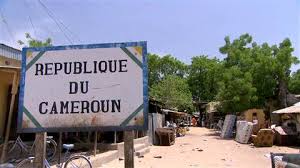
The 69 affected schools (mostly primary schools) are in Logone and Chari, Mayo-Sava and Mayo-Tsanaga departments of the Far North Region, which lies across the border from Nigeria’s northeastern heartland of Boko Haram. In Mayo-Sava, for instance, 20 out of 30 schools are not operating since the start of the new school year in September, said deputy-prefect Ibrahim Koulagna.
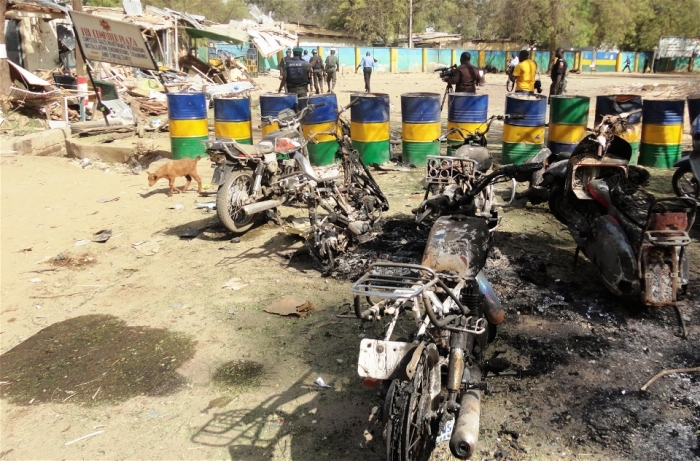
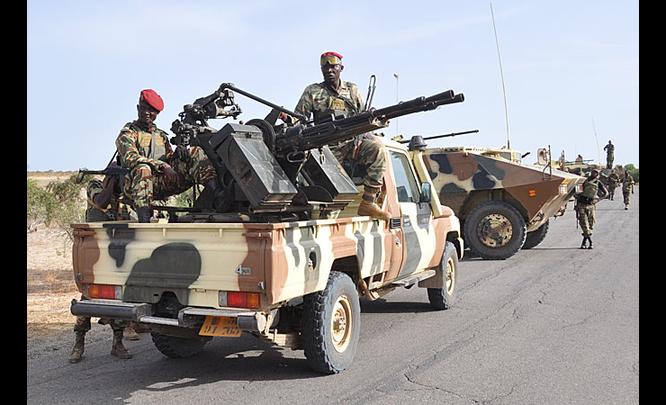
Boko Haram militants have repeatedly attacked northern Cameroon, abducting foreigners and locals as well as raiding police and border posts. Yaoundé authorities have beefed up their military presence in the region and the army recently claimed killing over 100 of the group’s fighters. The military in September said it had killed Boko Haram leader Abubakar Shekau – a claim dismissed by the insurgents.
“We are losing students each time there is an attack on a village even if it is several kilometres from here,” said Christophe Barbah, a school master in Kolofata area in the Far North Region.
DIRE EDUCATION STANDARDS WORSENING
Just a handful of government teachers assigned to the Far North Region remain in their posts. “In 2014, more than 200 trained teachers did not take up their posts in these localities and many seek transfer to other places due to insecurity,” an official of the Ministry of Basic Education told IRIN.
“I am the only government teacher left here on a regular basis,” said Barbah. “Because of my status as the head teacher, I cannot leave my post… We have resorted to seeking assistance from some educated young men and women in the communities to teach the children. But we have to motivate them with money if we want to keep them committed to the work. This is not always possible because most parents in this region are very poor and can barely afford food for the children to stay in school.”
Joseph Ampoam, a teacher who fled violence in Fotocol area near the Cameroon-Chad border, said he has decided to stay in Maroua (the Far North Region capital) rather than risk his life by going to work in the community.
MIGRATING FOR SAFETY
In Mayo-Sava Division, hundreds of students and their families have fled from schools near the border to those in Kolofata and Mora urban centres. Deputy-prefect Koulagna said that in August they registered over 3,600 internally displaced people, but many more could not be reached for registration, he noted.
BOKO HARAM LITERALLY MEANS “WESTERN EDUCATION IS FORBIDDEN.”
Military spokesman Col Didier Badjeck told IRIN that a recent creation of an army division in the Far North, and military equipment received from the US, Germany and Israel, would bolster the fight against Boko Haram.
“The short – and long – term implication will be enormous. The quality of education is bound to worsen and many youths will miss out on the opportunity to be at school and may end up being brainwashed into joining militant groups as a result of idleness,” said Mahamat.
IRIN
The humanitarian news and analysis service
of the UN Office for the coordination of Humanitarian Affairs.
The opinion expressed do not necessarily reflect those
of the United Nations or its Member States
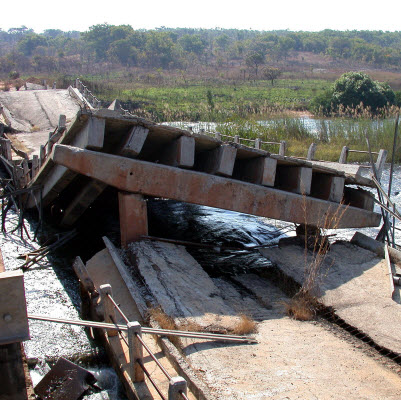
Third picture shows the bridge at the border between Nigeria and Cameroon blow up by Boko Haram
Dal Nostro Corrispondente Sportivo Costantino Muscau 20 marzo 2026 "Volete la Coppa d’Africa? Venite a…
Speciale per Africa ExPress Sandro Pintus 19 marzo 2026 “Non è che 'il Ruanda potrebbe…
Speciale per Africa ExPress Cornelia I. Toelgyes 18 marzo 2026 Mentre s’infiamma la guerra in…
Speciale Per Africa ExPress Fabrizio Cassinelli 17 marzo 2026 Mentre nel Medio Oriente in fiamme…
Speciale Per Africa ExPress Amedeo Cortellezzi* 15 marzo 2026 26 dicembre 2025 lo Stato d’Israele…
Speciale per Africa ExPress Cornelia I. Toelgyes 14 marzo 2026 La schiavitù in Mauritania è…